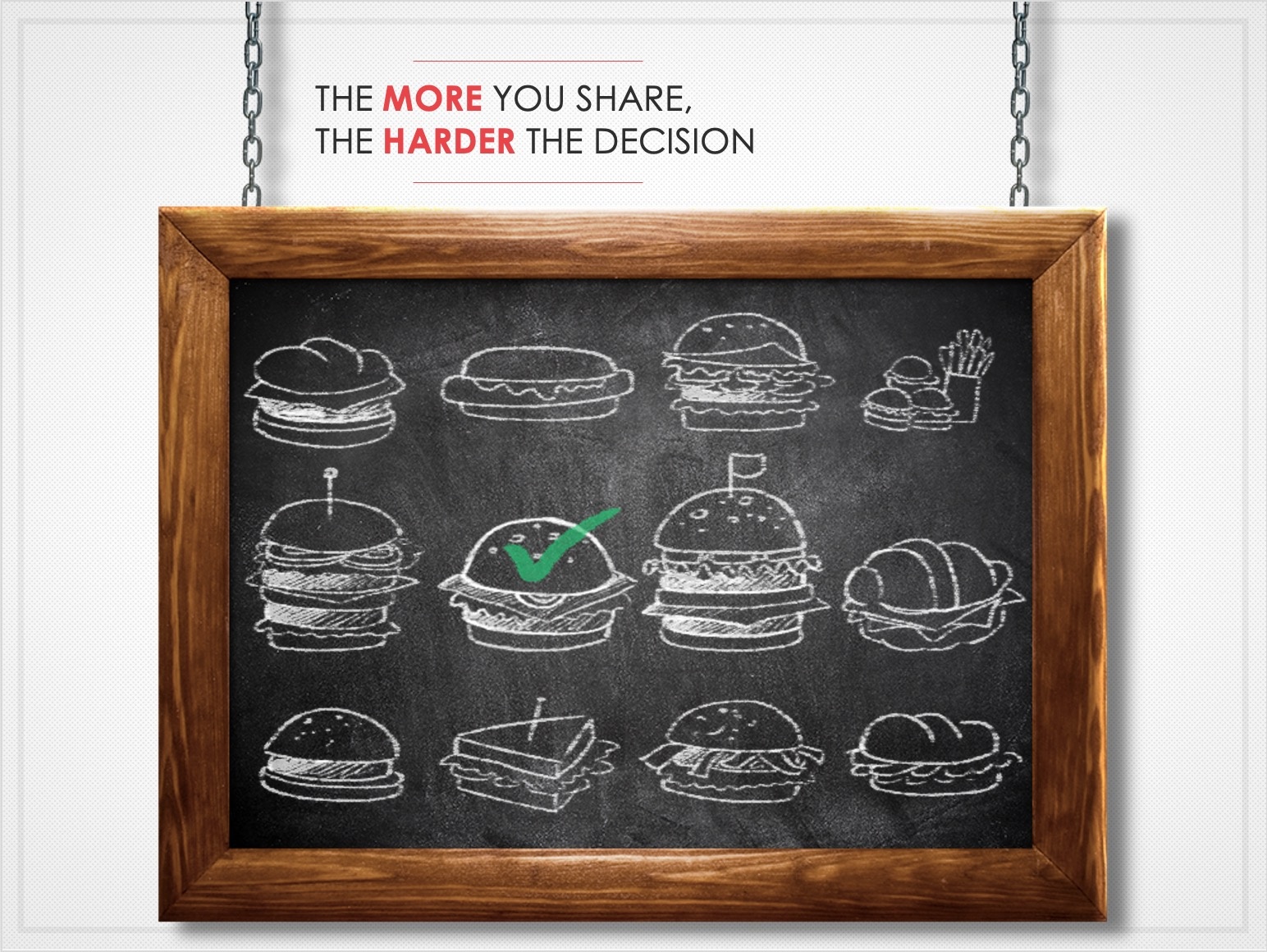
This is a slide from a deck I created a while back on the science of persuasion. The basic “choice overload” idea is well known. But there are a few counterintuitive and lesser-known nuances around this concept of abundance of arguments and persuasion. For example, sometimes, having a little difficulty in choosing an option can actually raise perceived value, as long as the options differ on meaningful dimensions. From a brain science standpoint, the anterior cingulate cortex (ACC) activates more when we experience conflict between appealing options. So, as you reflect on your own content (and especially if you have competition), consider offering a few distinct, effortful comparisons to increase engagement and value.
In addition, people can handle a lot of options better if the brain perceives them as belonging to distinct categories. The brain finds “different kinds of many” easier to process than “many kinds of the same.” As a practical guideline, if you’re presenting multiple choices to an audience (e.g., messages, visuals, features), highlight category boundaries to reduce cognitive fatigue.
And one more thing regarding abundance of choice: When options are framed as a reflection of identity (“Which burger fits your personality?”), choice expands satisfaction and memorability. The ventromedial prefrontal cortex responds more strongly to self-relevant choice than to simplified choice. So, consider adding identity-based framing to neutralize choice overload.