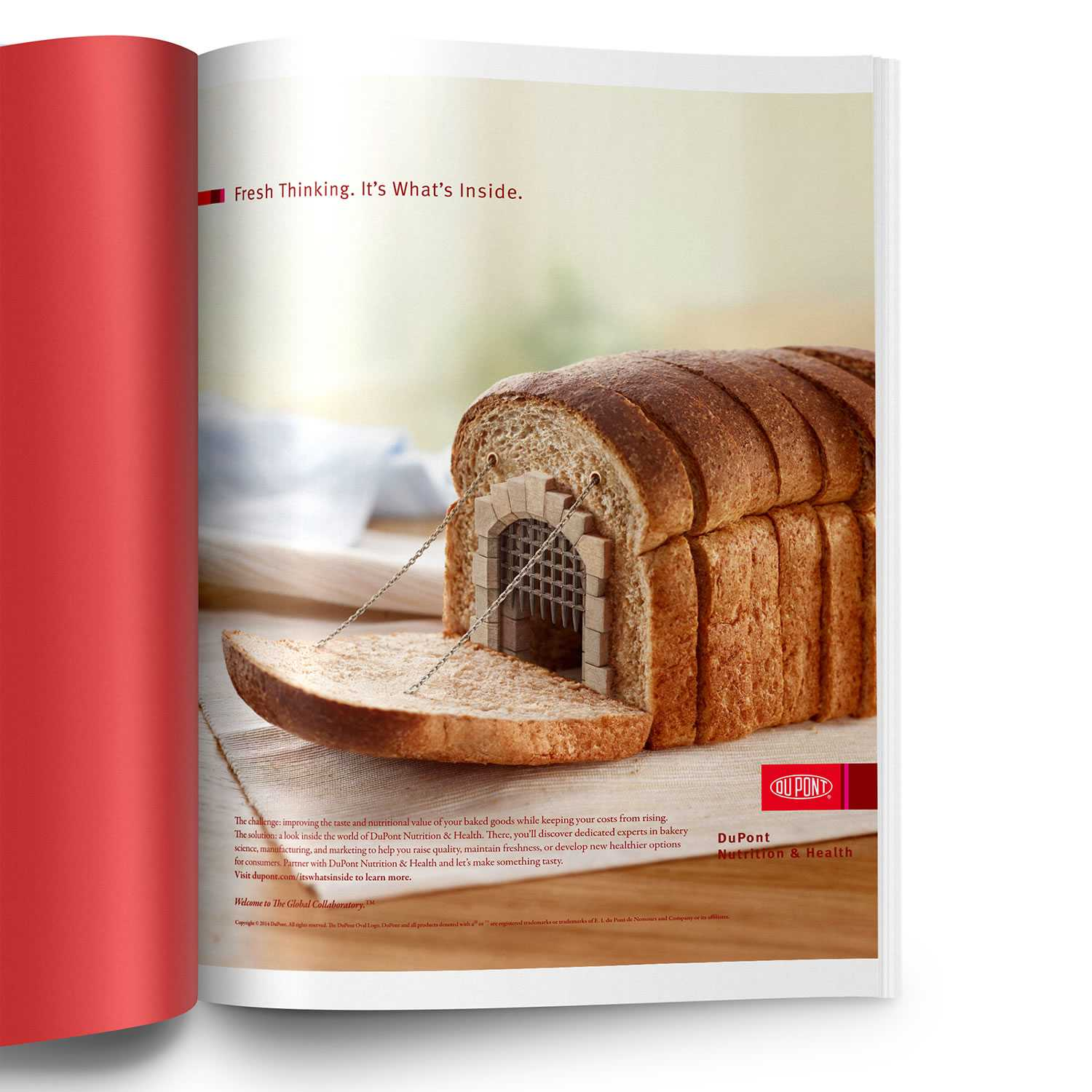
I am sharing this example because I often hear clients who believe that it’s difficult to produce creative B2B communication. DuPont Nutrition and Health is defying this belief. Their space is bakery science, and their customers are in the food/beverage manufacturing space (so they don’t speak directly to consumers in a supermarket). Their value proposition is the promise of improving the taste and nutritional value of baked goods, while keeping costs down. And their typical language is the language of enzymes, shelf-life, nutritional improvement, cost control... many abstract, technical terms that could become easy to ignore. They could be using stock photos, dashboards, or process diagrams to demonstrate how they maintain freshness and develop healthier options for consumers.
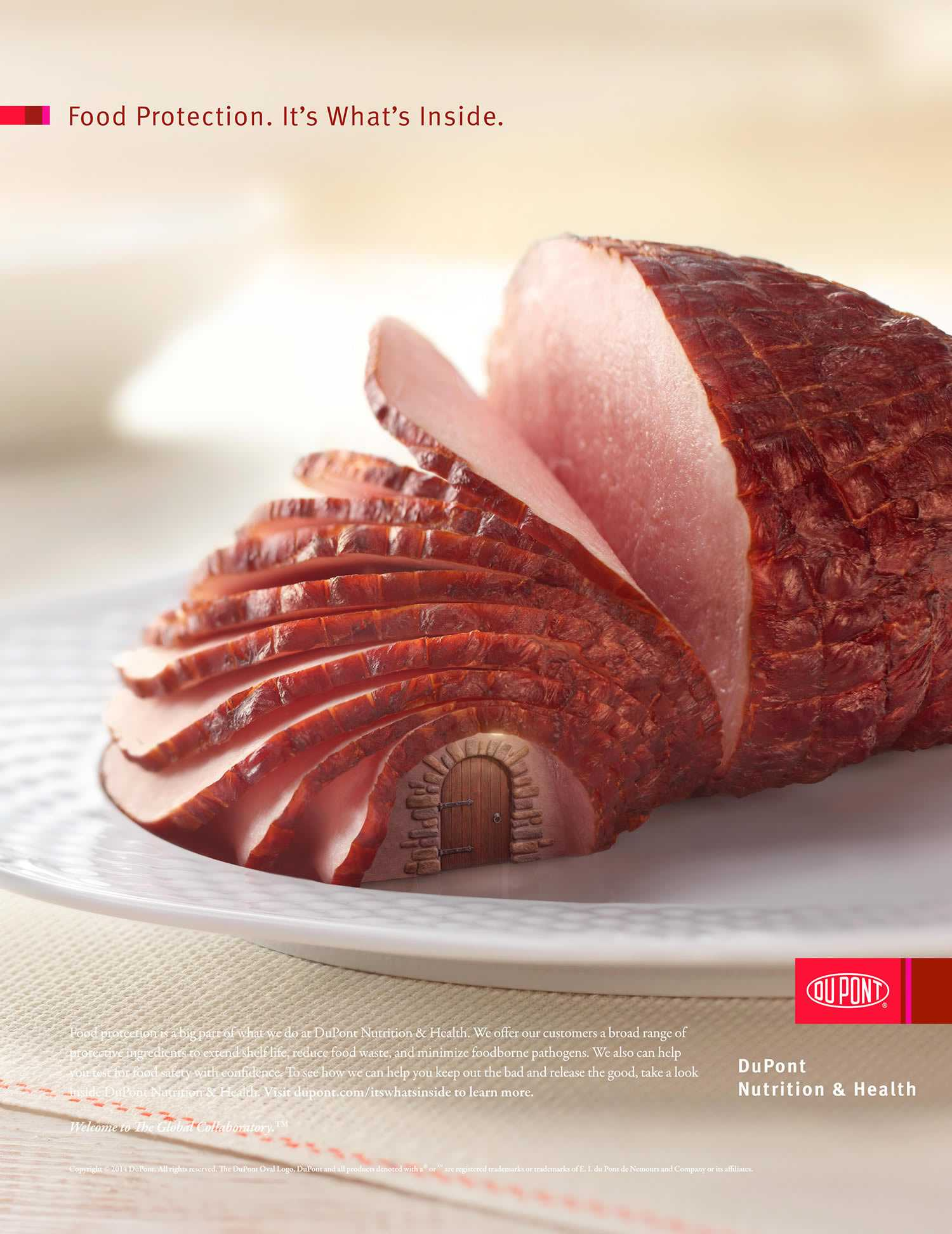
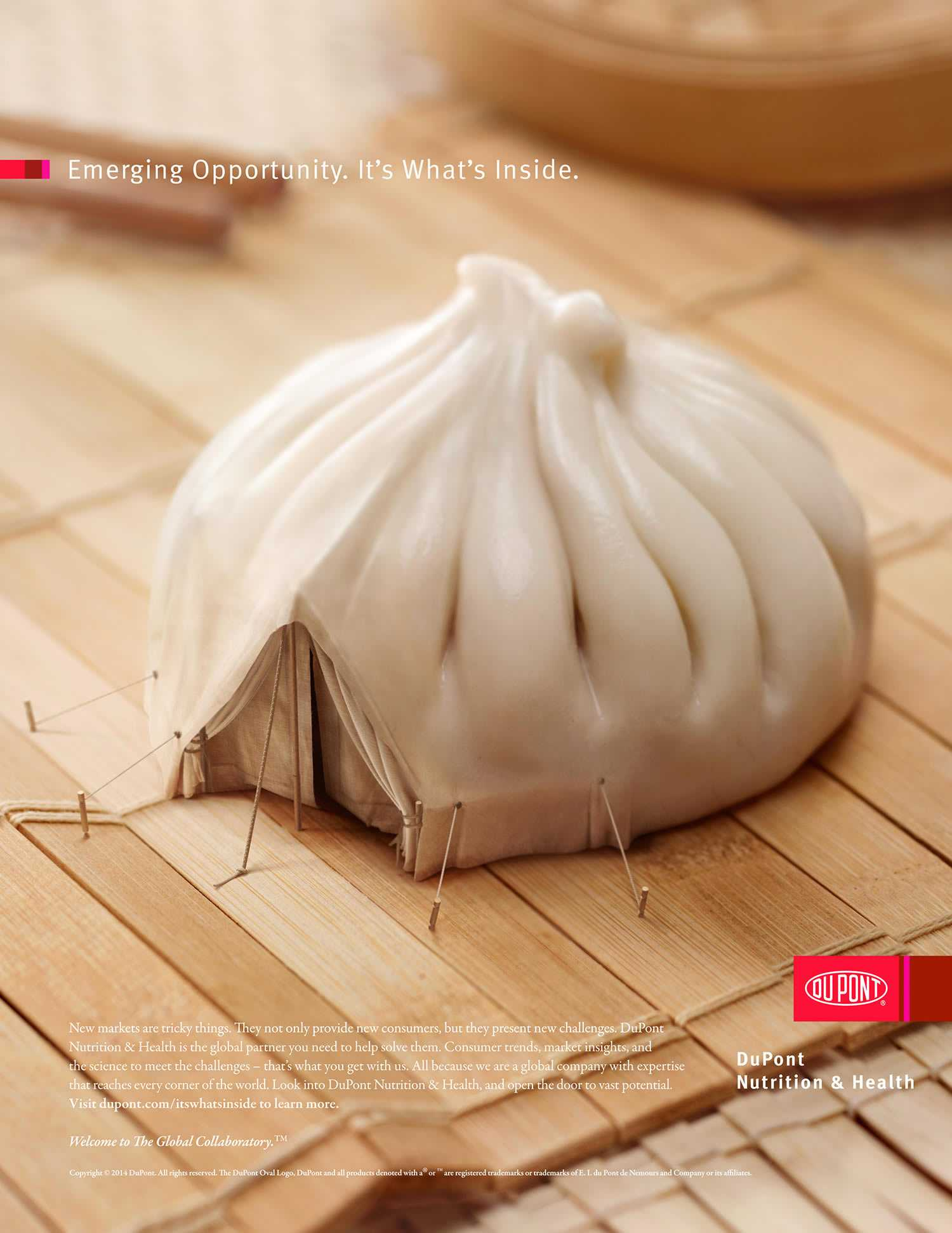
But, instead, they use sensory simulation and curiosity. Test it for yourself. What’s going on in your brain as you process the first image? You might be asking what’s inside the bread? Why is there a gate? Where does the drawbridge lead? All these questions create more cognitive participation than a direct claim like “Our ingredients improve freshness.” Take a look at the other two examples and they will accomplish the same thing, impacting memory in the process and not feeling sales-y.
So, next time, you must visualize concepts like insight, knowledge, and a problem-solving mindset (which, at some point, B2B teams have to share), and find a disciplined metaphor that offers a sensory experience. Ask, “What would our value feel like if someone could touch it, enter it, smell it, or see it at work?”