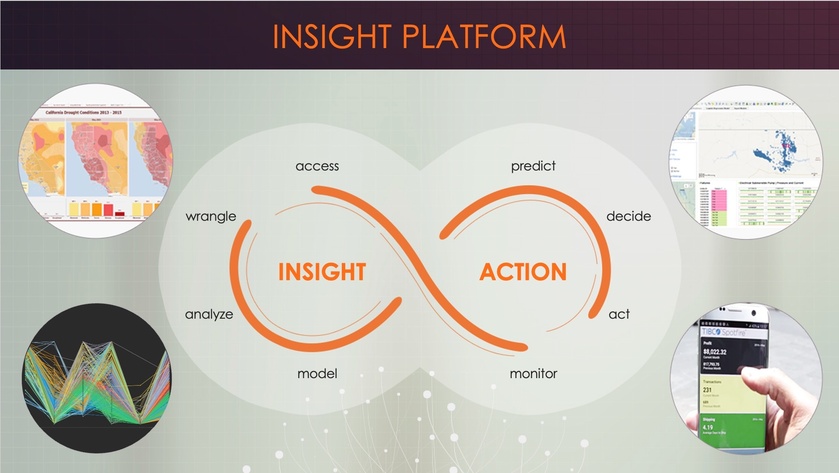
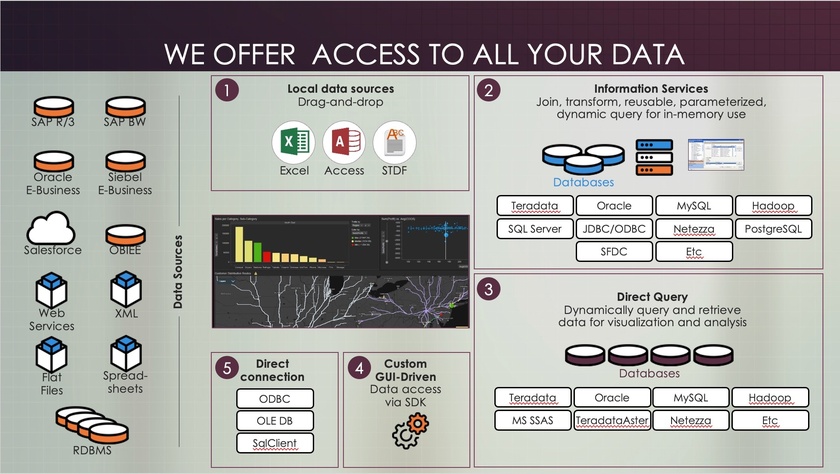
What are images asking your audiences to believe?
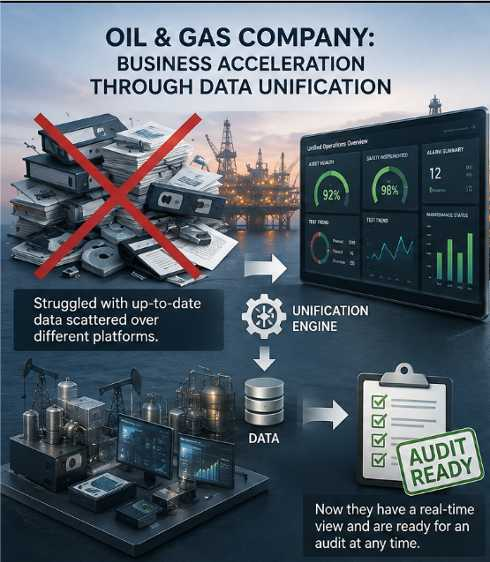
We were working on a customer presentation this week, helping them to visualize the safety of an oil/gas company accomplished through linking hardware and software. The client had generated some images on their own using AI tools, and in this example (you can detect the typical AI-style collage), the image showed scattered data flowing through a “unification engine” into a real-time dashboard, but the trouble is that while this looks like a diagram of how the solution works, there is no unification engine.
This reminded me of a statement by Roland Barthes, the French writer and critic, who wrote about seeing a photograph of Napoleon’s brother: “One day, quite some time ago, I happened on a photograph of Napoleon’s youngest brother, Jerome, taken in 1852. And I realized then, with an amazement I have not been able to lessen since: ‘I am looking at eyes that looked at the Emperor,’” I like this because someone had stood in front of a camera, and it connected us to a moment that happened. So, as a practical guideline, consider this: if you must visualize something that asks an audience whether a customer used a particular tool or achieved a result, ask whether someone has actually seen what you’re proposing. Of course, it’s possible to create visuals that ask an audience to imagine or see an idea differently (I am a big fan of surrealists), but a case study (which the image below wanted to be) should be a record of what actually happened, not an invented image.