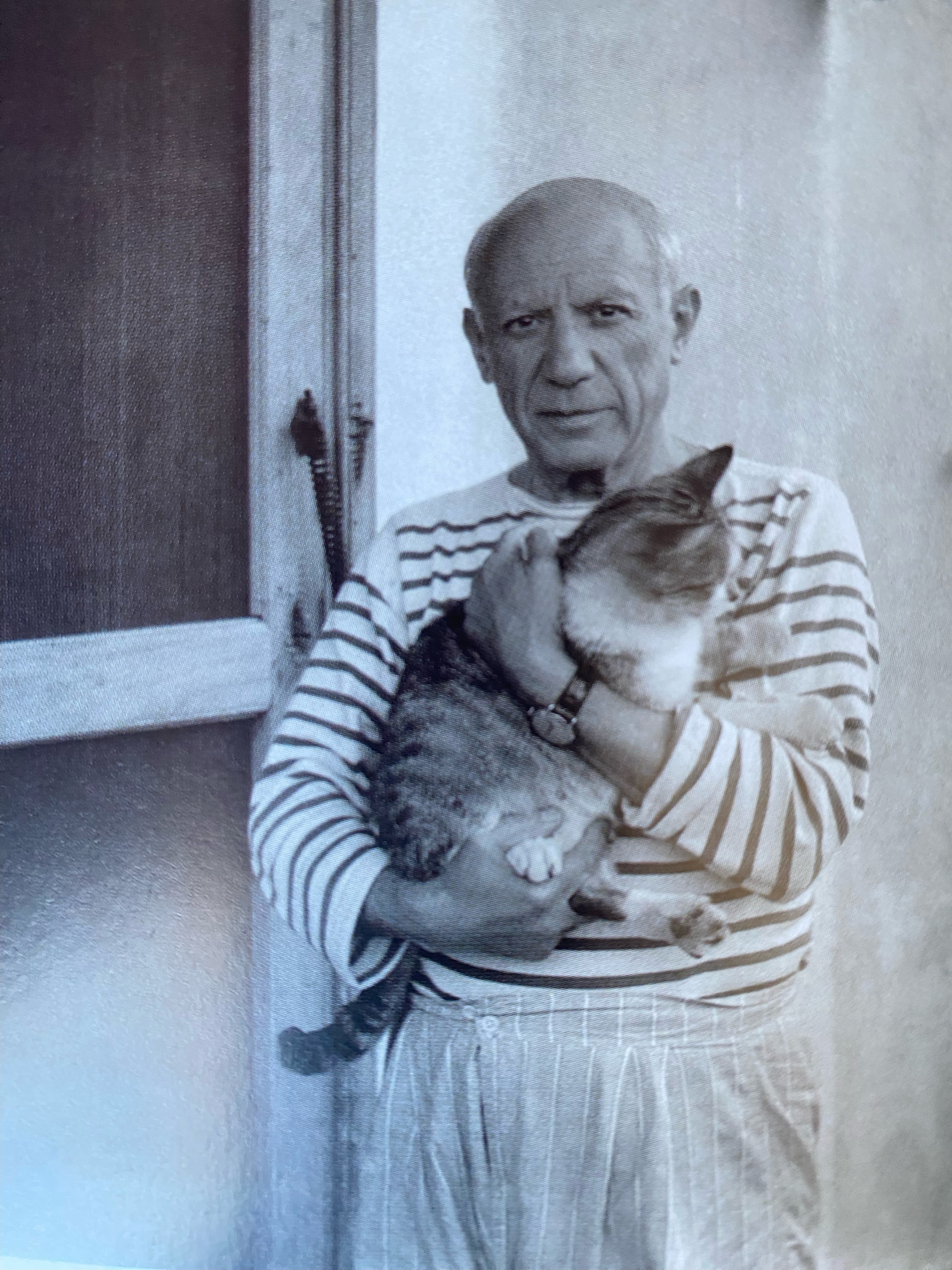
Browsing through a book titled “Artists and Their Cats,” I was surprised to find out that Pablo Picasso was a cat person. He was a brilliant and prolific artist, but by most historical accounts, he was also deeply complex, often cruel in his personal relationships, and capable of destruction. Biographers and former lovers describe him as possessive and manipulative. He believed that artists needed suffering around them to thrive, and that love and pain were inseparable sources of inspiration.
Yet in this photo, we see him capable of tenderness. And interestingly, Picasso’s art often radiates warmth, humor, and affection. His paintings of children, clowns, and lovers reveal a man who could express care, even if he couldn’t always live it.
The contrast reveals a truth about how empathy works in business communication: we’re rarely universally empathetic; we’re selectively empathetic. We empathize with ideas, causes, or outcomes, but sometimes at the expense of people. Many brilliant professionals defend their vision with compassion for the work and indifference to those who challenge it. The brain rewards this selectivity because focused empathy conserves cognitive energy but it narrows perspective and can weaken trust.
A practical guideline emerges from these observations: can you expand your circle of empathy? This would ensure that your brilliance includes others in its light.