When the sign is loud and the thought is quiet
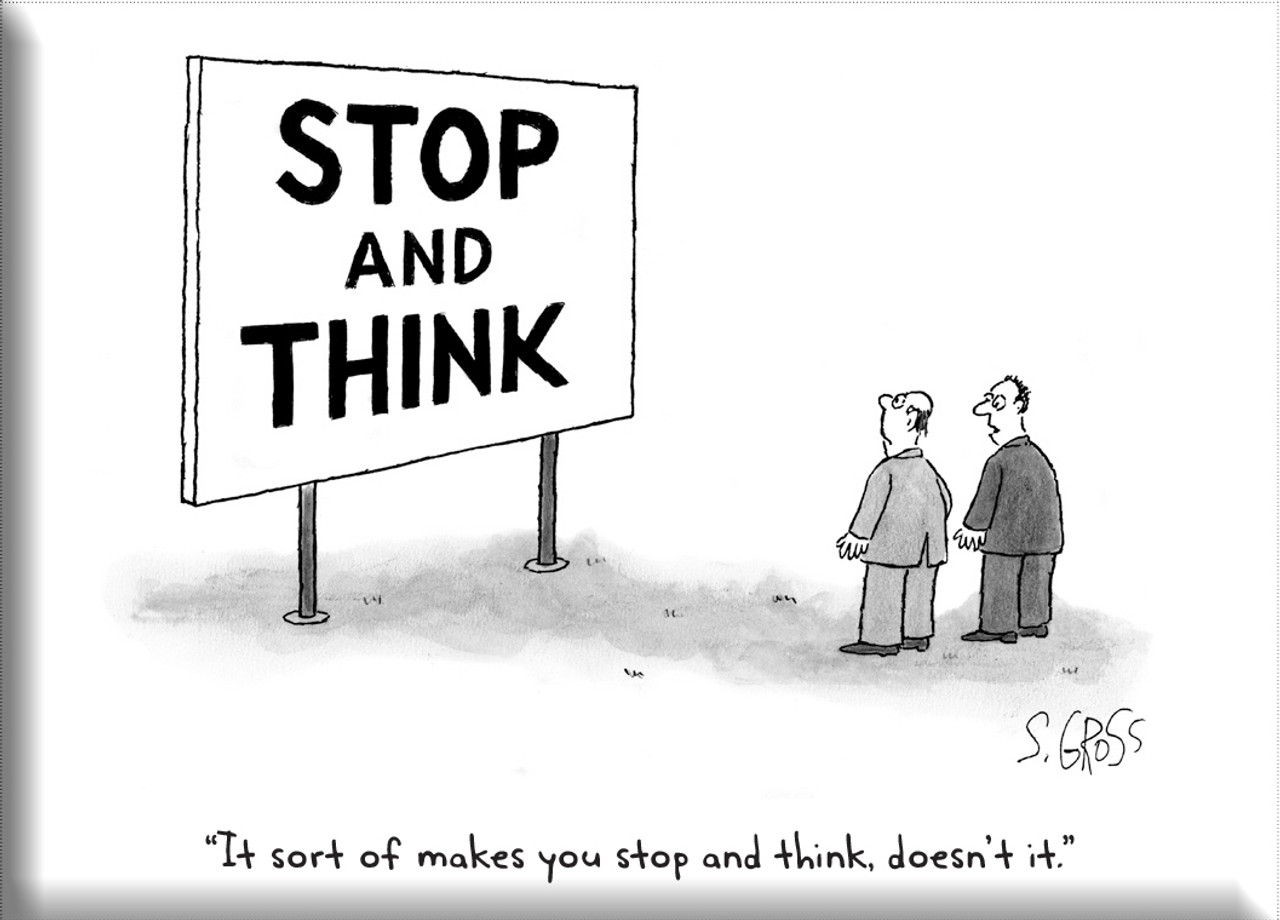
I’ve kept this cartoon for a while because it captures a few patterns that show up constantly in business communication. People often outsource real effort to phrases that merely sound thoughtful. You see the same move in business language filled with signals of depth but not depth itself: “provocative insights,” “rethinking success,” “innovation starts here.”
In addition, the scale and seriousness of a sign can make people act as though it’s profound, even though the content is banal. When a cue looks weighty (big type, formal tone, polished visuals), the brain assigns depth that may not be there. In presentations, we often confuse presentation rigor with intellectual rigor.
But the sharpest lesson is this: how often do people notice they are living inside a cliché? The character’s comment is a cliché about thinking, yet he doesn’t see that he’s reenacting the very thing the cartoon is mocking. This is reflexive cognition at work: our tendency to default to familiar phrases because fluency feels like wisdom. And that feeling is the trap.
A practical test for business communication is this: before you say or show anything, ask whether the audience must supply even a small piece of the meaning. If the answer is no, you may be drifting toward fluency rather than insight. A little cognitive work on their end is worth more than a slogan on yours.