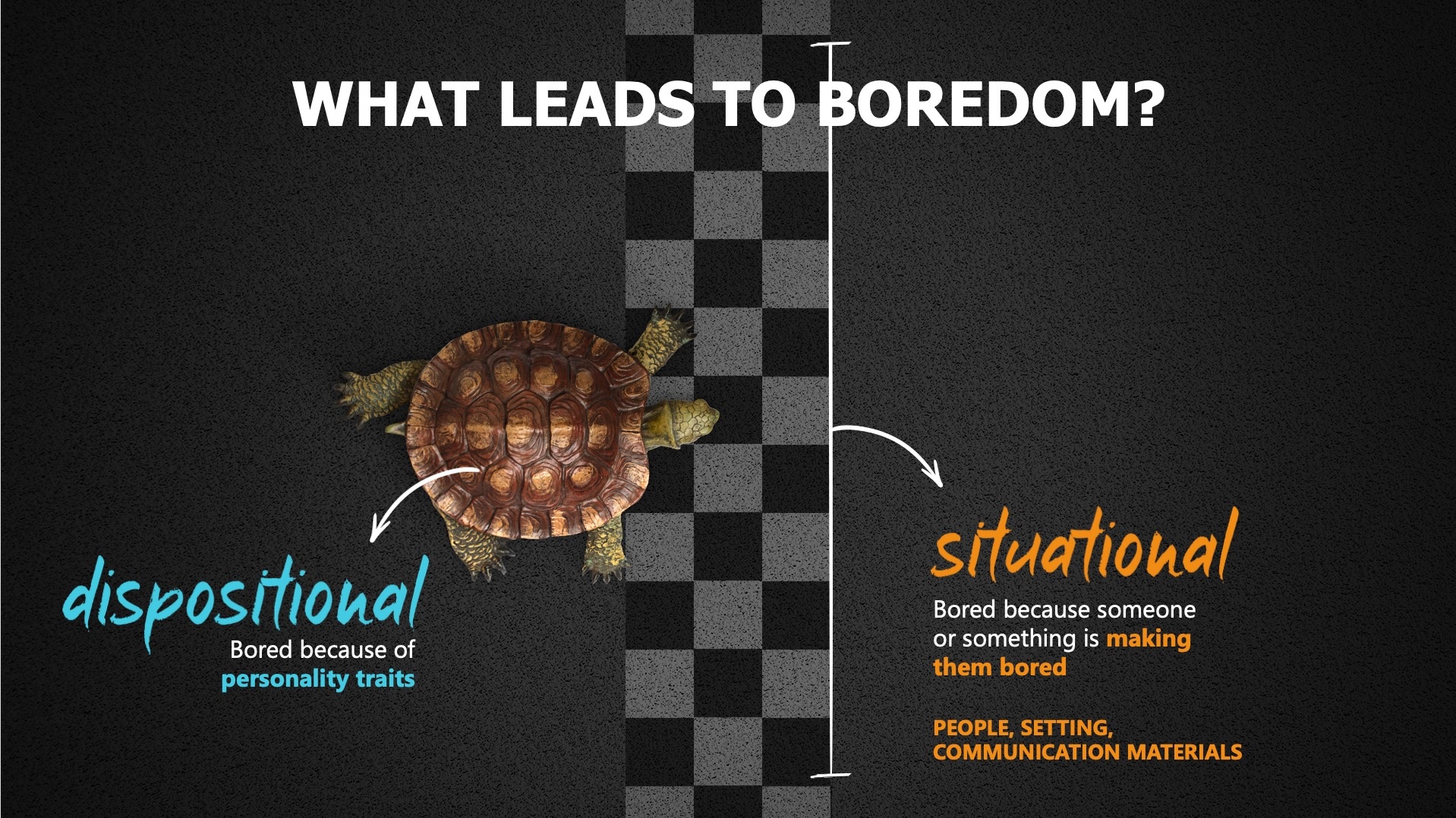
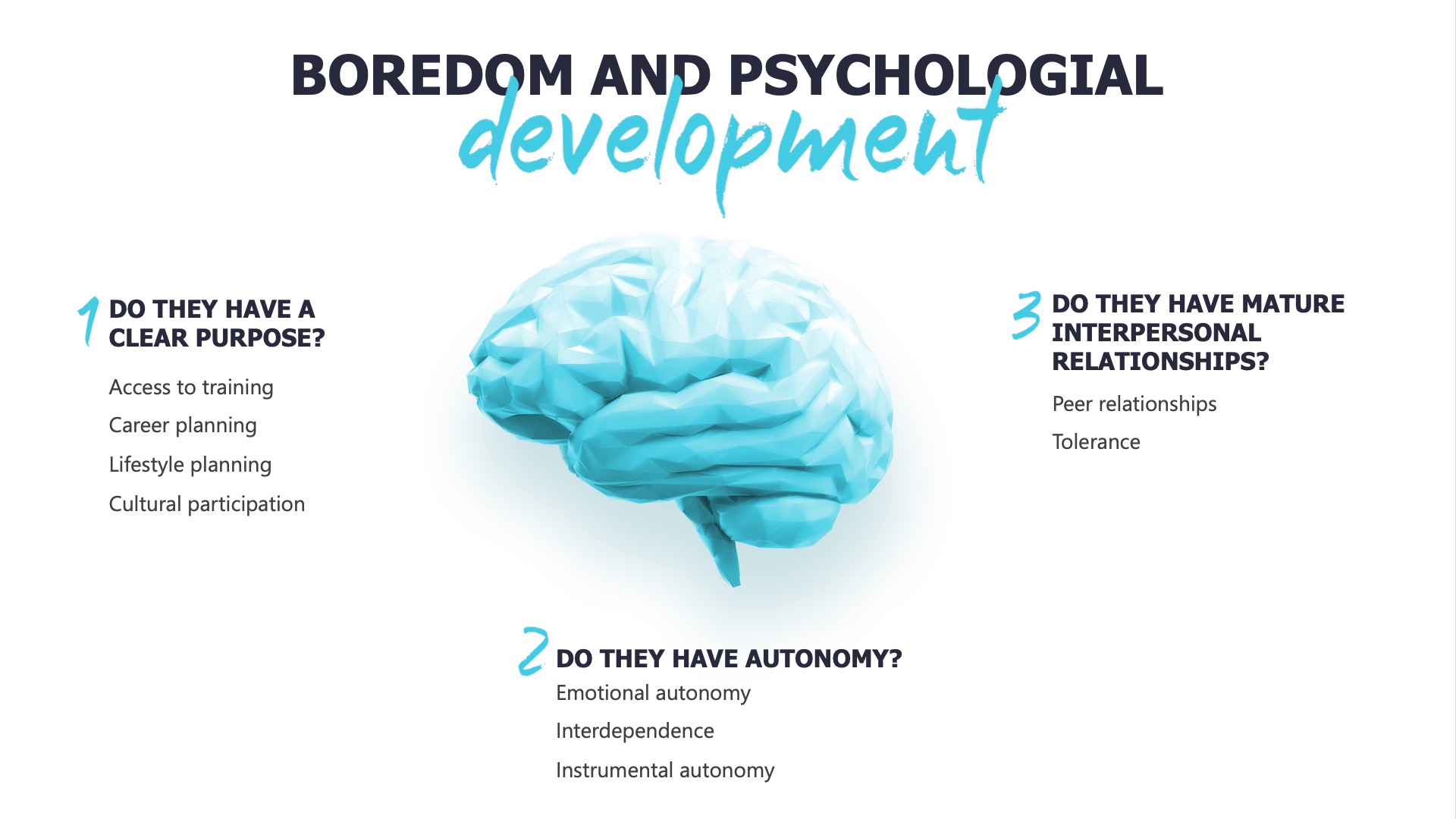
In the neuroscience workshops that I teach, I often speak about the psychology of boredom. The source of boredom is two-fold (see slide 1 below): some of it may be dispositional, meaning that some individuals are more prone to boredom than others. It can also be situational, meaning that something (or someone) in the environment is making you bored. As a communicator, you may think that you can only control situational boredom because if someone is predisposed to boredom, you can have the most engaging materials, and they will still not pay attention. The good news is that you can even have an impact on the dispositional side too (see slide 2). Reflecting on the content you create for others or the processes you may be able to set up, take a look at those segments and see if there is an area where your ideas could have an impact.
For example, you might be able to help someone set well-defined educational goals and plans, take the necessary steps toward a promotion, participate in activities with a lot of cultural variety, or learn to trust their own ideas and feelings. or develop tolerance for those with different backgrounds, lifestyles, beliefs, cultures...You can see how the list can be fairly long in terms of how you can impact others' dispositional boredom, so that by the time they come to view your materials, they may be more engaged.