


How to become memorable
Science & Tech • Business • Writing
You will learn guidelines on how to become memorable to your business or personal audiences by using brain science. This is important because people in your life will make decisions in your favor based on what they remember, not on what they forget. To get others to do what you want, they must remember what you want. I am a cognitive neuroscientist and am looking forward to sharing practical results from my neuroscience research that will help you stay on people's minds.
Interested? Want to learn more about the community?

Learn more first
Audience reaction leaves clues

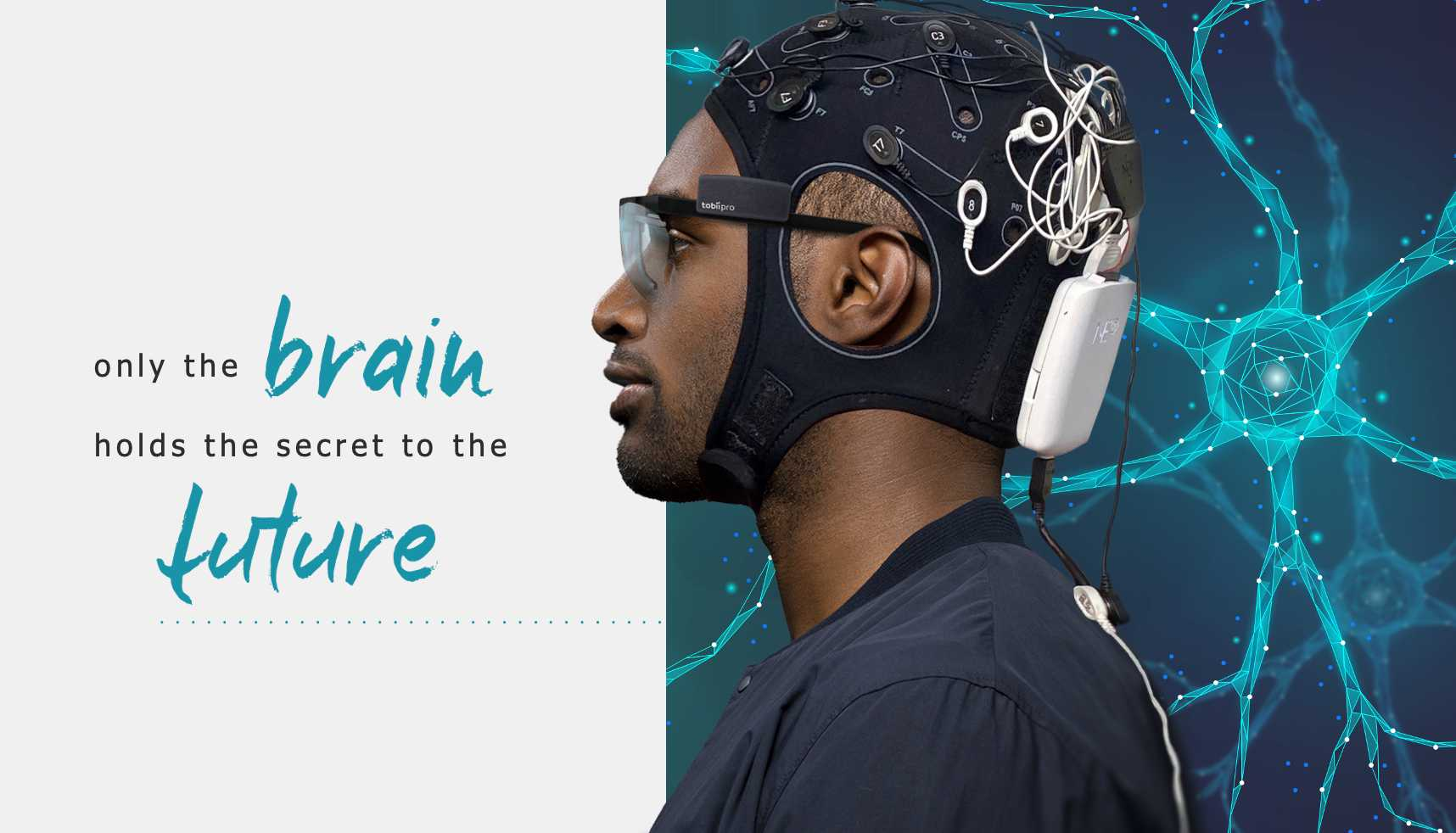
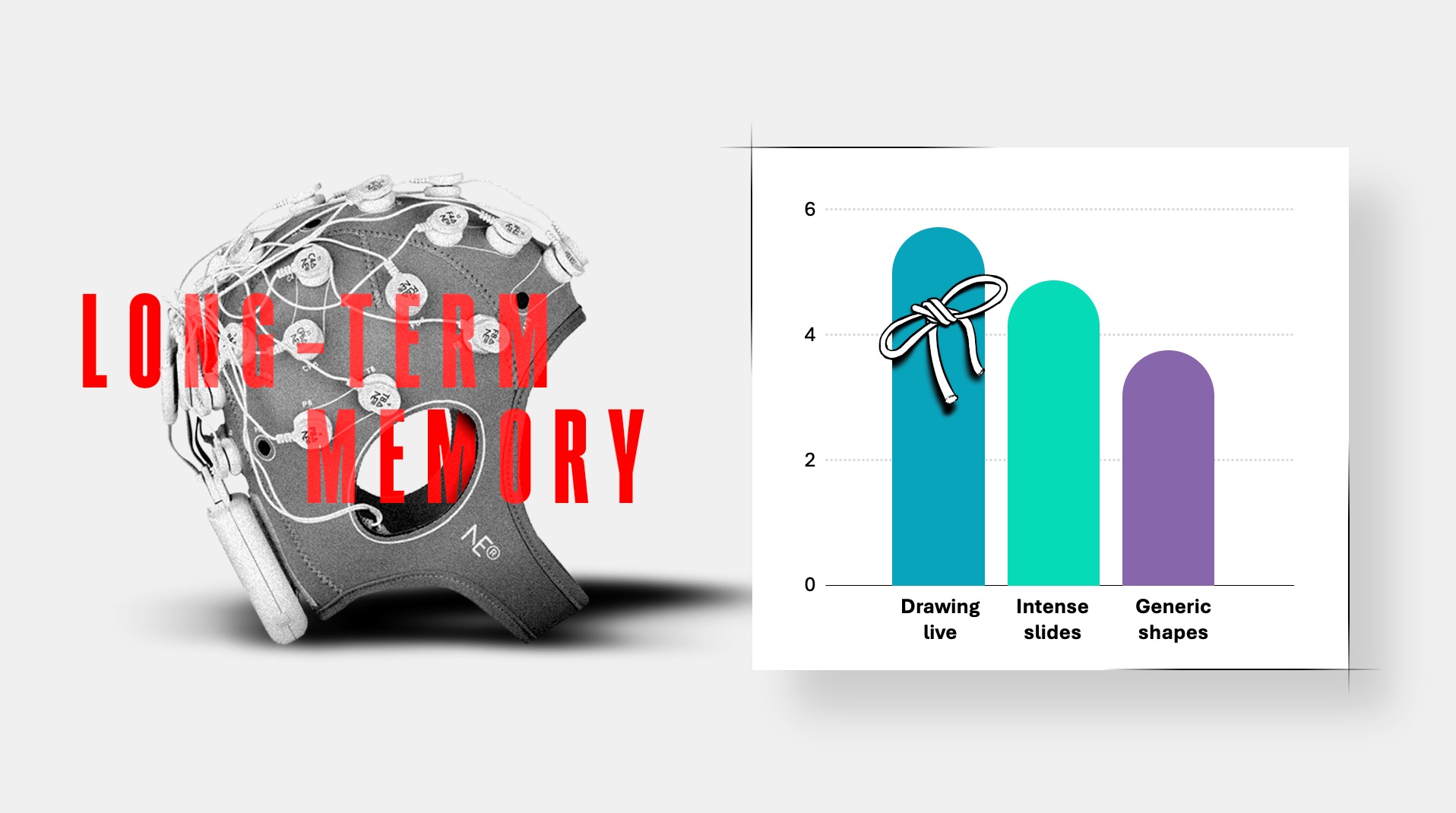
When I study how the brain reacts to content, I typically use the neuroscience gear you see here and capture people’s EEG, ECG, GSR, and eye tracking data. I generally look at a combination of signals from the brain and body related to attention, motivation, and memory. But you don’t always need a lab, because audience reactions often leave traces. Advanced tools can detect these reactions with millisecond precision, but even without them, you can learn to watch for when people lose attention, or when they look overloaded, confused, emotionally neutral, or have poor memory of the content. This matters because people often behave in lawful ways. So the next time you prepare for a presentation, workshop, or pitch, ask what signals your stimulus is likely to trigger: Where will the audience likely have higher energy? Where will they have to work harder? What is most likely to be remembered later? You may not have a lab. But you still have signals that can predict how you can do things differently the next time.

post photo preview
Interested? Want to learn more about the community?

Learn more first
What else you may like…
Videos
Posts
Articles
How memory picks a favorite

When people create business content, they often rely on variety to keep an audience engaged. Images, text, shapes, colors, charts, stories, etc., and all of it meant to stimulate. And even though variety works because it gives the brain a buzz, the problem of forgettable content starts to settle in when there is nothing for the variety to anchor in.

Consider each segment in the first shot in the video below as an abstract representation of a slide that is meant to attract attention in a real deck. Because there is so much variety, the brain treats them all as equal strangers. Nothing stands out, because nothing repeats. As the teal circle begins to appear (this is an abstract representation of what I call the 10% message), the brain starts to assign it meaning. Not necessarily because it is the most beautiful (sometimes 10% messages may be bland), but because, with repetition, it becomes familiar. With each appearance, it starts to function like a small gravitational pull. It gives the ...

00:00:09
Your brain on slides

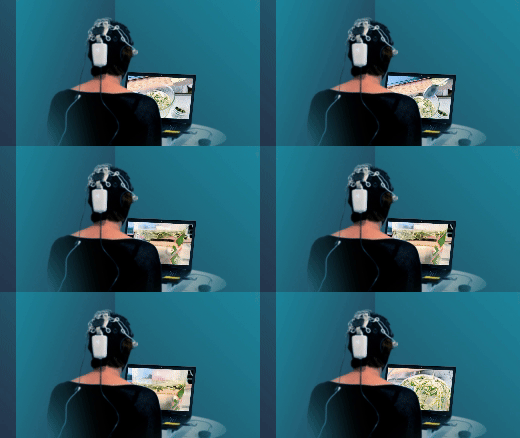
Here is real-time brain data from a participant in one of my neuroscience studies: You can see how we monitor EEG for cognitive activity, ECG for physiological arousal, and eye-tracking for visual attention. Here are some practical reminders of what we learn from participants and these types of studies:

1) You can create surprise (which can impact memory) with sequence. It’s not only what you show, but when you show it. So, analyze the flow of segments in your communication and consider breaking that flow right before important points.

2) Clarity without struggle feels good, but clarity after struggle feels earned. Your audience's brains will appreciate fluency and ease, but... consider offering it after tension and some difficulty. Otherwise, fluency is an illusion: people think they will remember something in the moment, but they forget very quickly (sort of like hearing a good joke that you think you will remember forever, but you don't). Make them work harder to detect ...

00:00:09
Where the eyes go, the mind follows

In one of my neuroscience studies, I wanted to see how buyers were reacting to a text-based email about the features of a software product vs. a brief demo about that product (also included in an email). What you’re seeing below is the aggregated heatmap from the group of buyers who saw the product demo inside the email. The heat maps enable us to detect where buyers are looking and for how long.

The product advertised was a software application that allows presenters to remove background noise when they hold virtual meetings and create a distraction-free environment (e.g., no dogs barking in the background).
Note from the heat maps how buyers’ attention gravitates toward the speaker’s face, especially the eyes and mouth. This was not surprising because the brain seeks out faces to interpret emotion, intent, and credibility. But then something subtle happens.

As the demo progresses, attention shifts, but not randomly, purposefully. Viewers follow the speaker’s gaze, then track...

00:01:01
Some of the best communication hides the labor

I remember reading a book a while ago in which the author commented on supermarket apricots. They are durable, the author said, uniform, built to survive the trip from orchard to the supermarket without any pampering. Today’s apricots must be tough, he said. And with these kinds of tough apricots, it’s easy to miss the tenderness and the juice and the flavor of a real apricot. I sense that it’s the same with some corporate content, where so many things look strict and tough, because of an inclination toward marketing correctness. People become so hypnotized by an organization’s culture that they forget some of their personal magic and zest.

The Italians have a word for a better kind of mastery: sprezzatura, which means the art of making something difficult look natural, effortless, unforced. Sprezzatura does not mean something looks sloppy. In business communication, it is a concept that can give us a more precise lens than “be more creative.” It says: do the hard work ...

post photo preview
Can too much attention lead to forgettable content?

It is intuitive to believe that attention paves the way to memory. There are exceptions to this rule. When we already have people’s attention and are still asking for more, the experience becomes distracting and eventually forgettable. Imagine people who approach you for a solution to a problem they have, or who ask you to sell them a product they need. They are already giving you attention. In those situations, if you make communication too stimulating (e.g., sharing too many features of a product, or offering an overly arousing presentation, attacking the senses to extreme), the distractions take away from the message that must be remembered. For example, creators of mandatory programs such as code of business conduct training feel they need to add extra flare and flash to make those programs more palatable. Going on a date and wearing extra flamboyant clothes will create a similar effect: The extra attention leads to forgetting what’s important. Better to reserve the extra ...

post photo preview
Psychology of boredom

In the neuroscience workshops that I teach, I often speak about the psychology of boredom. The source of boredom is two-fold (see slide 1 below): some of it may be dispositional, meaning that some individuals are more prone to boredom than others. It can also be situational, meaning that something (or someone) in the environment is making you bored. As a communicator, you may think that you can only control situational boredom because if someone is predisposed to boredom, you can have the most engaging materials, and they will still not pay attention. The good news is that you can even have an impact on the dispositional side too (see slide 2). Reflecting on the content you create for others or the processes you may be able to set up, take a look at those segments and see if there is an area where your ideas could have an impact.

For example, you might be able to help someone set well-defined educational goals and plans, take the necessary steps toward a promotion, participate in ...

The storyboard advantage
From ideas to engagement

When creating a presentation, it's tempting to think of it as a finished product—a sequence of static images combined with text locked in place. But the most effective presentations are not just static layouts; they're experiences that unfold. Here is an example from a presentation where we wanted to demonstrate the importance of creating an immersive experience in architecture/construction. 

Only for Supporters
To read the rest of this article and access other paid content, you must be a supporter
Read full Article
From generic to genuine
Reducing cognitive friction in business presentations

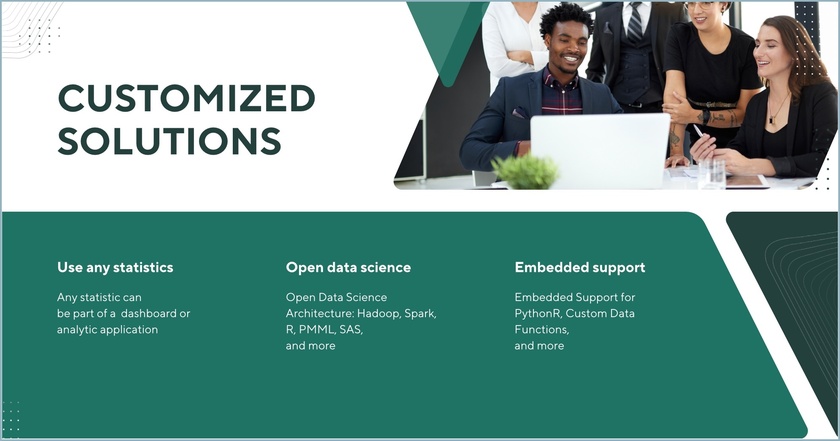
I am noticing that businesses often promise their customers personalized services as a means of differentiation. We offer “tailored solutions,” “customized experiences,” or we “focus on what matters most to you”…. they typically say. Yet, these promises are packaged in standardized presentations filled with generic stock photos. You must have seen slides like the one below many times: Images of generic meetings, people at laptops, or happy people looking at phones. Despite the claim of a “tailored approach,” the content feels like it could belong to any brand.

This conflict between the promise of personalization and templatized design creates cognitive friction for the viewer, who unconsciously senses a disconnect between the message of uniqueness and the impersonal images they’re seeing. Cognitive friction occurs when an audience encounters content that feels out of sync with the promised message. The brain, always searching for coherence, struggles to reconcile this gap, making the message less memorable and even eroding trust.

There are several ways to fix this, but here are three. Use images and compositions that help your audience envision:

  1. The experience they will have while working with you
  2. The process they will complete to achieve business results and/or
  3. Outcomes they are seeking

The following slides are from a sales presentation we designed for a platform used in predictive and prescriptive analytics. Each slide exemplifies one of the guidelines above.

Visualizing experiences

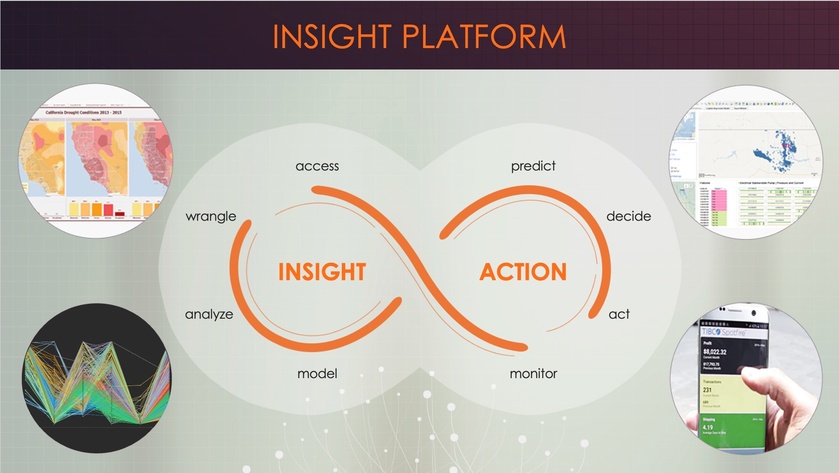
Using this slide, the vendor visualizes a proposed journey and explains to his customers how they can oscillate between action and insight by using various software capabilities. The screenshots are from the real application; they are not stock photos.


Visualizing process

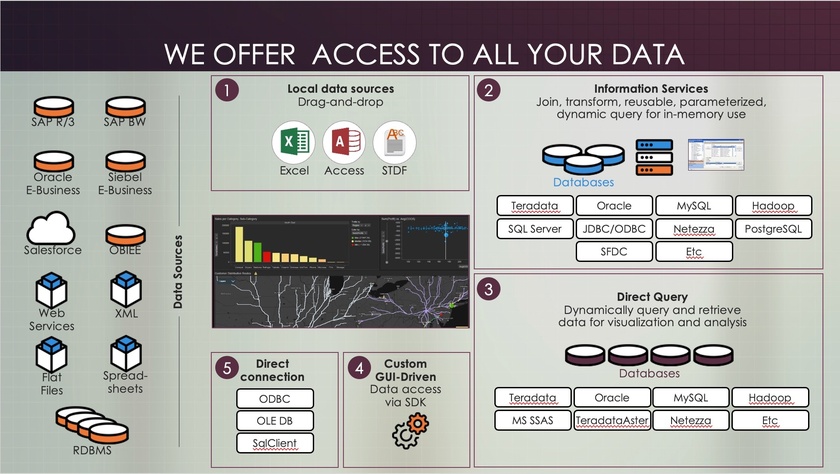
These segments are displayed gradually (note how some are numbered) to explain how the process of working with the vendor and the software will unfold. This step-by-step breakdown gives a concrete sense of how collaboration happens in real life.


Visualizing outcomes

This slide is presented multiple times to remind customers why this vendor’s solution is useful. Displaying expected results reinforces the value that a solution can bring.

Throughout these examples, notice the absence of overly staged smiles and generic stock photos—the kind that make presentations feel interchangeable, standard, and impersonal.

By anchoring your message in authentic experiences, clear processes, and real outcomes, you’re aligning your content with the brain’s natural drive for coherence. This approach reduces cognitive friction and reinforces the trust you’ve promised through personalization. The result? A presentation that feels unique, credible, and memorable—one that embodies the tailored experience you’ve promised.

Read full Article
Tea, trust, and thinking
Using slow moments to connect with an audience

In one of my neuroscience studies, I decided to compare the brain's response to a business video meant to intrigue buyers with an app versus... well, a video of tea brewing. As you can see below, nothing but tea leaves slowly steeping. I thought, 'This is going to be the ultimate snooze test.' But to my surprise, people weren’t bored! On the contrary, they enjoyed the moment and remembered it later. I suspect one of the reasons is because of a process called reflexive thinking.

Reflexive thinking is a kind of mental space where, when there isn’t much happening on screen, our brains start filling in the blanks. We reflect on our own thoughts, make connections, or dig into personal insights. This state doesn’t just hold attention—it encourages better memory and even creativity.

Of course, the surprising results might also be due to anticipation. Even with slow visuals, the brain stays alert, waiting for the unexpected. Maybe something surprising will emerge from the cup? This quiet anticipation keeps viewers engaged on a subtle level, almost as if they’re playing a mental game with the content.

The brain thrives on the unseen edges of a moment, where thought meets possibility.

So, how can you use this in your own content, even if you’re not a designer?

  • Use gentle transitions: Instead of sharp cuts or rapid slides, try slow fades. They subtly signal the brain to slow down, encouraging a deeper mental pause.
  • Create a few minimalist moments: Include a slide with just one word or a blank pause with a simple background. This "mental whitespace" gives viewers time to digest what came before, making it effective even in tech-heavy presentations (as long as it's kept to a minimum).
  • Slow down the summary: Consider using a reflective tone to signal a shift from information delivery to introspection. This change in pace cues your audience that it’s time to absorb and reflect on what they’ve learned, reinforcing their memory of the content as they mentally summarize it themselves.

Sometimes, the mind finds depth not in speed but in the silent pull of what might come next.

Read full Article
Available on mobile and TV devices
google store google store app store app store
google store google store app tv store app tv store amazon store amazon store roku store roku store
Powered by Locals