Sometimes I hear business teams say that a polished presentation can kill the room. In construction or architecture especially, where top firms have the opportunity to "present" to the project owner (e.g., when redoing a hospital, conference center, or office building), they think that buyers may want to feel the team thinking with them, not performing at them. They consider that the walk-around-the-table, the sketch, the questions, the conversation...all these ad-hoc moments contribute to great bonding, which slideware cannot achieve....they seem to imply.
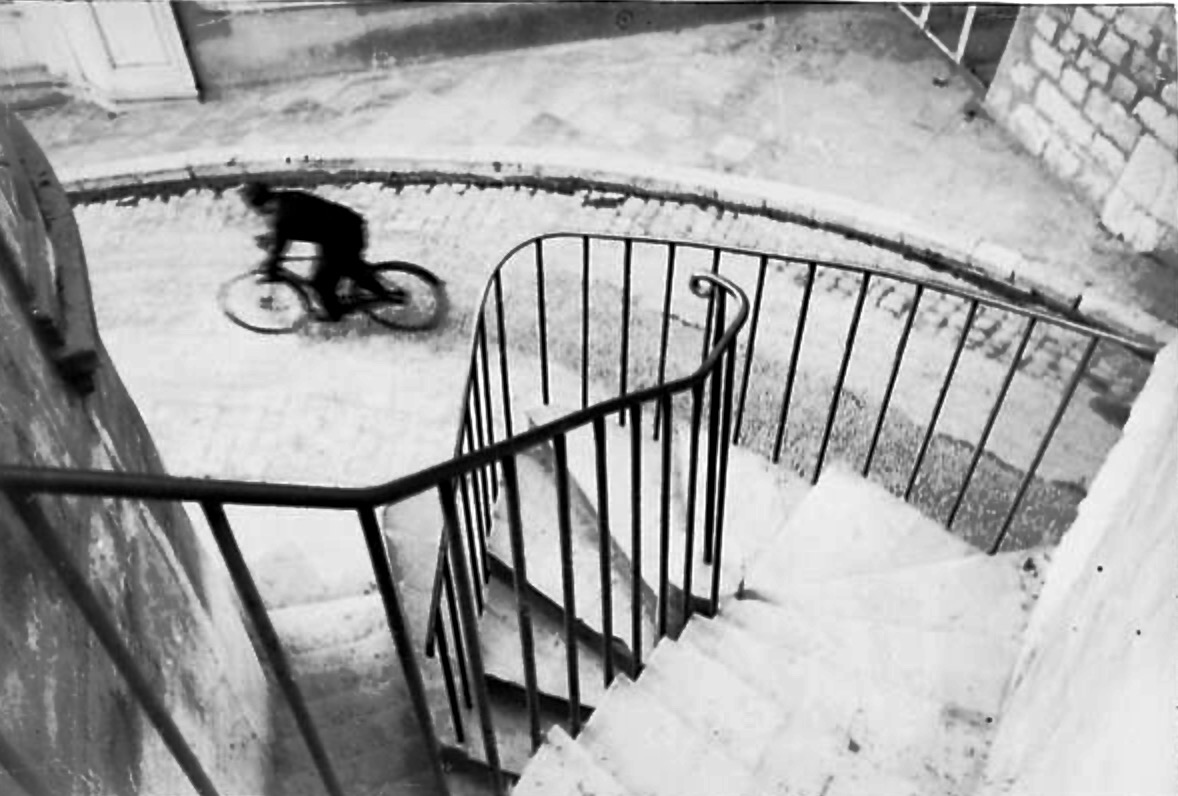
As I was thinking about whether these sentiments are true, I came across this iconic photo by Henri Cartier-Bresson, taken in 1932 (often referred to as The Cyclist) in the Var department of France. The image is considered one of the foundational works of street photography and photojournalism. If you hear the photographer describe this craft, you'll hear him say that photography is a poetic experience, not just documentation. It's drowning yourself, dissolving yourself, he says, then "sniff, sniff, sniff, being sensitive to coincidence. You can't go looking for it, you can't want it, or you won't get it. First, you must lose yourself," he says, then it happens. I agree with all his sentiments (similar to construction companies improvising around the room), but even Henri still had to bring the Leica to the setting and had a trained eye to notice when motion and geometry intersected just right.
It's the same with presentations in competitive environments. After several competing teams present, the client may remember the energy but not the message you needed them to remember. So, a strong presentation should not be seen as a script that kills spontaneity, but rather the frame that helps spontaneity become memorable. It gives the audience a visual, verbal, and emotional structure so that when the decisive moment happens (the client's question, the sketch on the table, the story from the field), the team knows what to do with it and can stay in control of what the buyer takes away.
Otherwise, without a framework for a designed and differentiated message, memory is outsourced to chance. The cyclist may still pass through the frame but no one will be ready to capture it.