Jerry Seinfeld must be an inspiration for anyone in the communication business. This is because he obsesses over quality and detail and is often considered the ultimate craftsman when it comes to words. For example, he tells a journalist about writing this joke: “Marriage is a bit of a chess game, except the board is made of flowing water and the pieces are made of smoke.” But he was not satisfied with the fact that “made of” appears twice. It took him a few years to drop the first “made of,” with the help of gestures: he now draws a square in the air and makes a motion to indicate flowing water, so he can just say “....except the board is flowing water....” and give up the phrase “made of.” A professional polishes the craft, an amateur just goes with the flow.
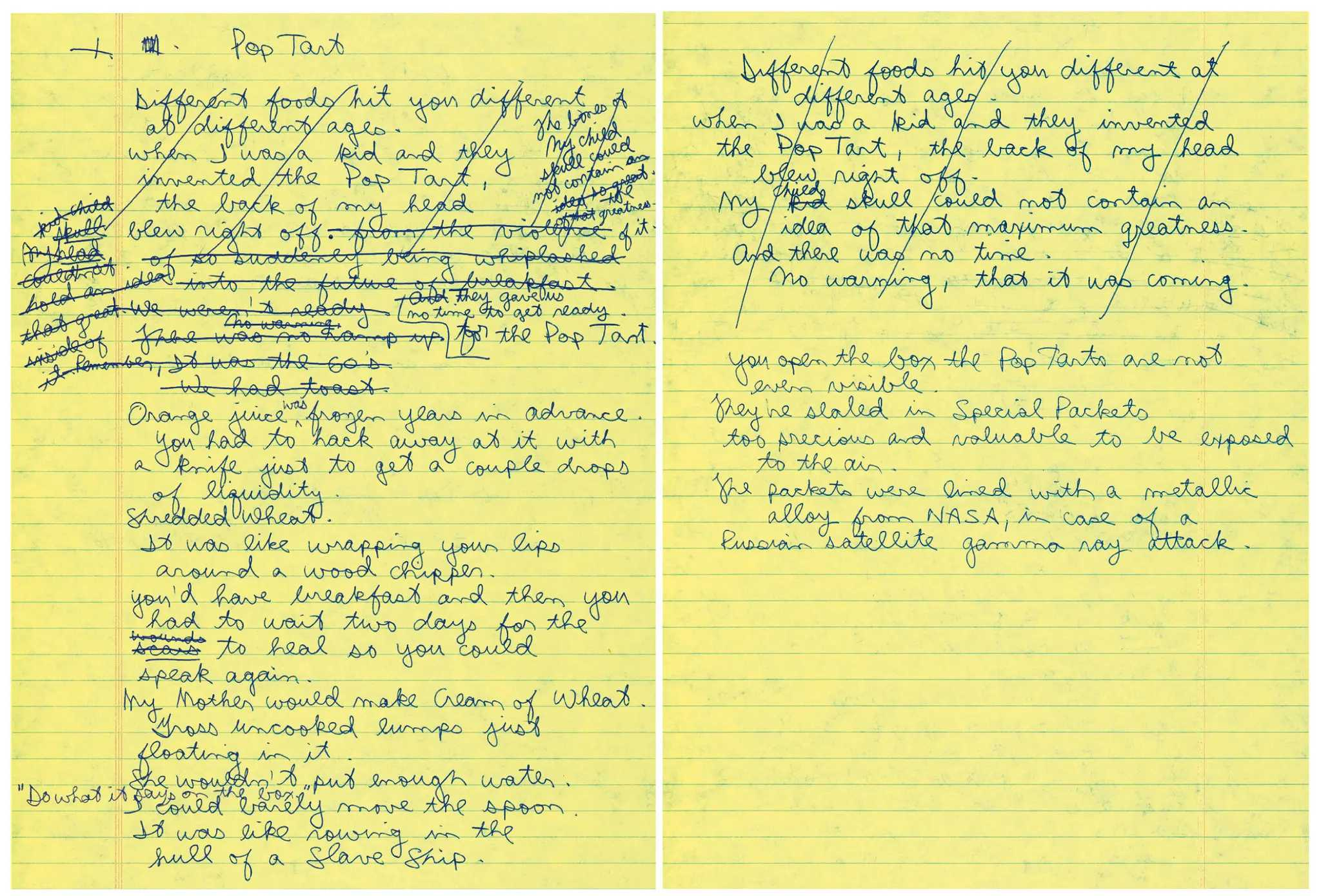
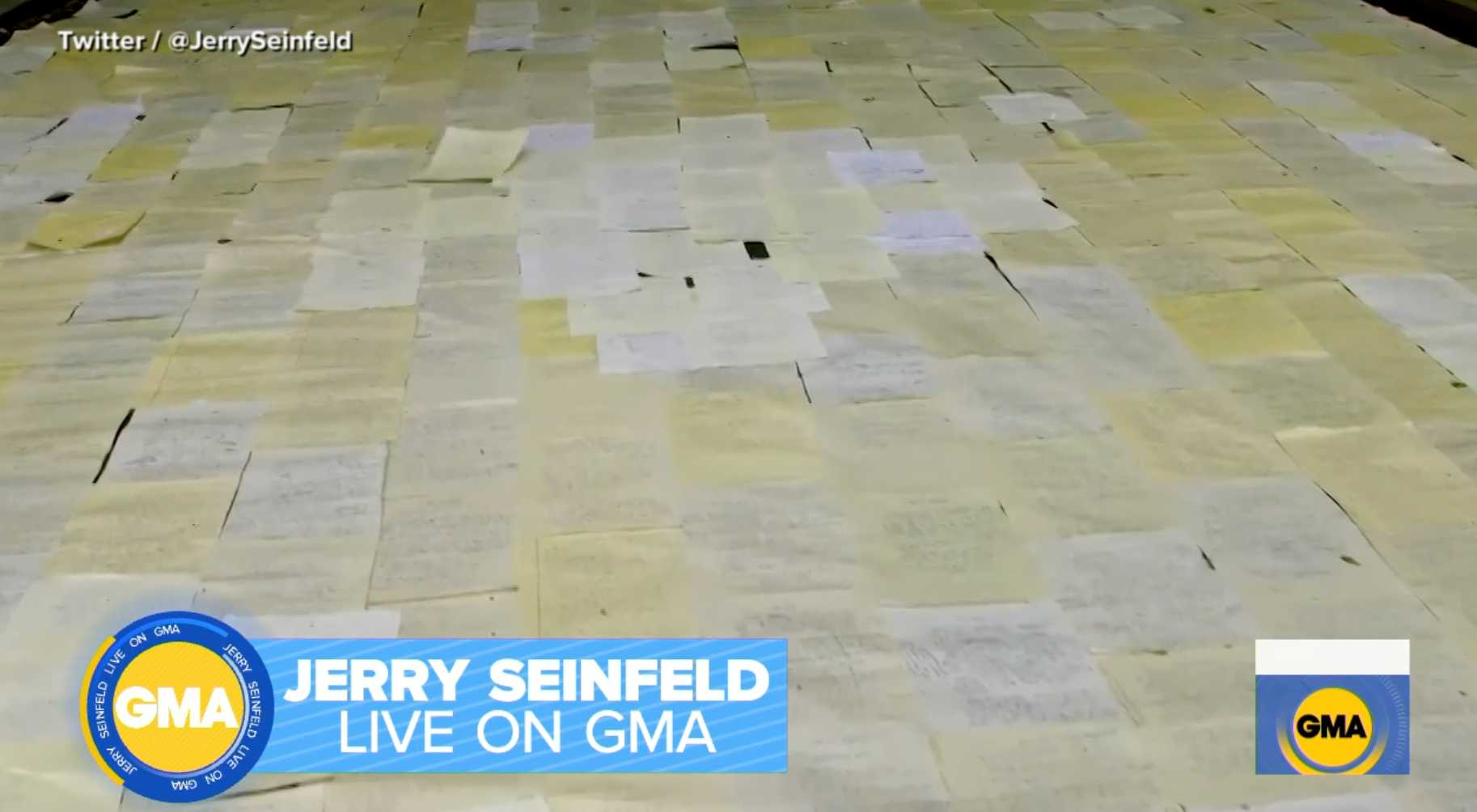
How does Seinfeld get to word economy and picking just the right words? He reasons through every word on a legal yellow pad with a Bic pen, away from computers, iPads, or algorithms. He writes things down and nurses jokes for weeks, months, sometimes years, until they are just so. In the first picture below, you can see him working on a joke about Pop-Tarts; even though he doesn't initially know where to take it, he figures it out as he writes. He describes the process in his book titled “Is This Anything”: “Whenever I came up with a funny bit, whether it happened on a stage, in a conversation, or working it out on my preferred canvas (the big yellow legal pad), I kept it in one of those old-school accordion folders,” Seinfeld writes. “So I have everything I thought was worth saving from forty-five years of hacking away...” The second picture below shows a segment from a Good Morning America interview, where he laid down pages from his inventory to create a flow that pleases the ultimate boss: his audience.
In interviews, Jerry Seinfeld thinks he has a stronger sensory acuity than most people, and, from a brain science perspective this is is true, some people do differ in their sensitivity to environmental cues, partly for genetic reasons. But I suspect something else is happening here, which we can all learn from: after decades of studying words and behavior, Seinfeld has also trained his brain to keep noticing more in the ordinary and he detects details most of us filter out. For instance, he noticed that when the cell connection drops while two people are on the phone and one person calls the other back, the phrase that one of them uses most of the time is: “I don’t know what happened” (as if someone expected them to explain the highly complex inner workings of telecom). That’s a phrase Seinfeld would write down, and through the process of writing, he would eventually determine if this “is anything.”
We may not all genetically have a keen sense of observation, but we do have access to pen and paper, and it’s so useful to the process of noticing and thinking and craftsmanship to not outsource our thoughts completely to the machine but, at least every so often, observe reality more intently and watch the pen moving on paper as it’s registering your reactions and words. In other words, don’t outsource the noticing and writing about what you see. And as you process reality, train your brain to constantly ask, “Is this anything”?