Can monotony make us better?
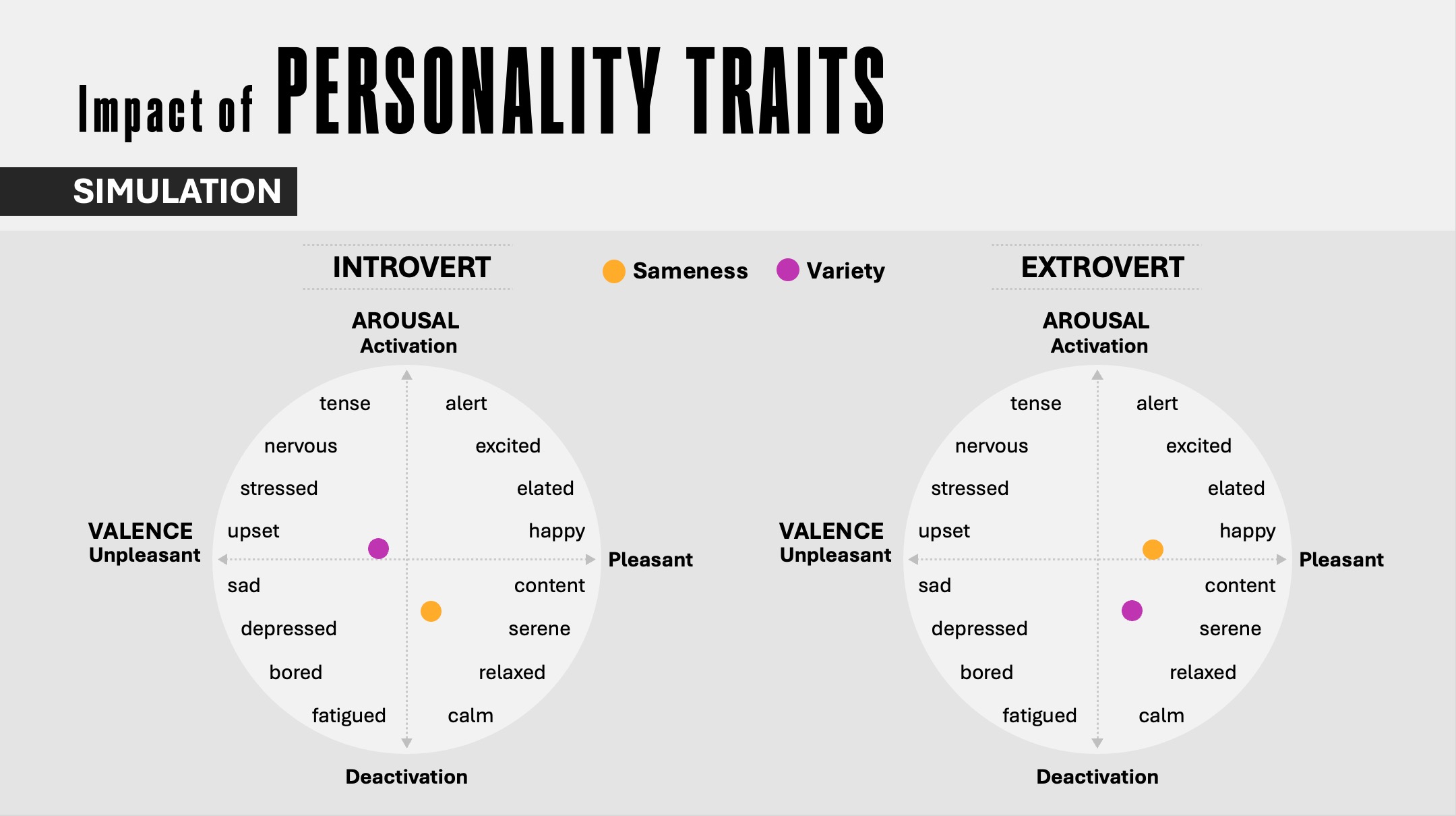
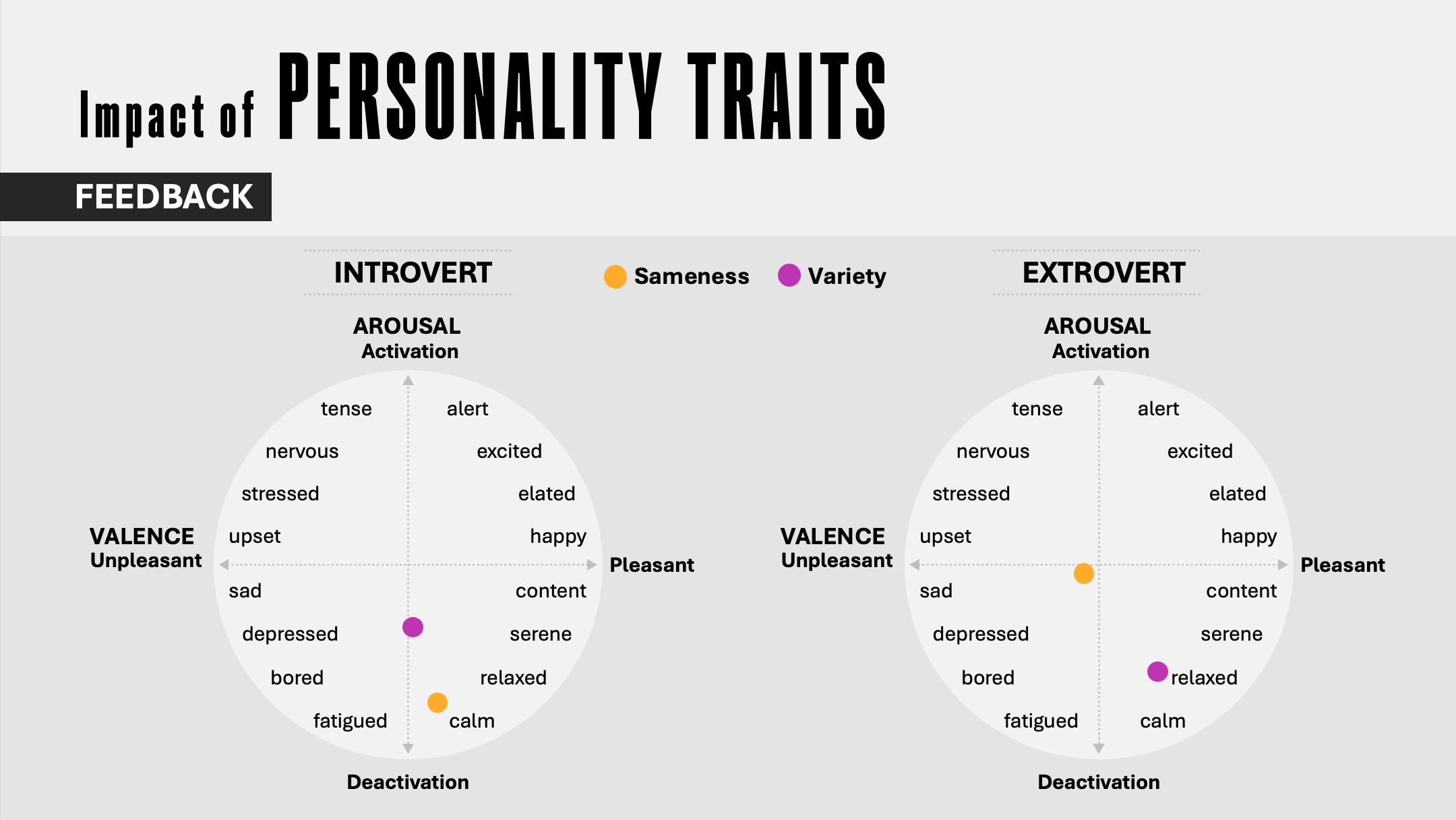
Here are two charts from a global neuroscience study I completed, where I was looking to see what happens in the brain and body when people learn a skill in two ways: repeating a task again and again (Sameness group), or adding some variety to protect against boredom (Variety group), and also to observe some demographic differences. Essentially, the research question was: does monotony have any learning advantages? During the study, participants completed a role-play (either in the sameness condition or the variety condition), and then they received feedback on how well they performed. The first chart displays the aggregate signal (EEG and ECG) parsed by personality type (introvert vs. extrovert), showing affective variables, meaning how much people enjoyed the experience and how alert and awake they were during that experience. The second chart shows the same results except for how people processed the feedback they received after completing the task. Participants used AI to learn and receive feedback, and the task involved learning persuasive skills to carry on a negotiation conversation.
Several things may surprise you and emphasize the importance of studying the brain through neuroscience rather than other research methods. If you asked people in a survey format, “What do you think extroverts would prefer when learning something?” the answer would be: variety. The study showed otherwise. Notice how the extroverts complete the practice in a relaxed state, which runs against the assumption that extroverts need constant stimulation. In addition, while extroverts’ variety result looks relaxed and pleasant, introverts’ is closer to neutral or slightly unpleasant. So “add variety” is not necessarily the universally engaging design choice that you hear about in instructional design.
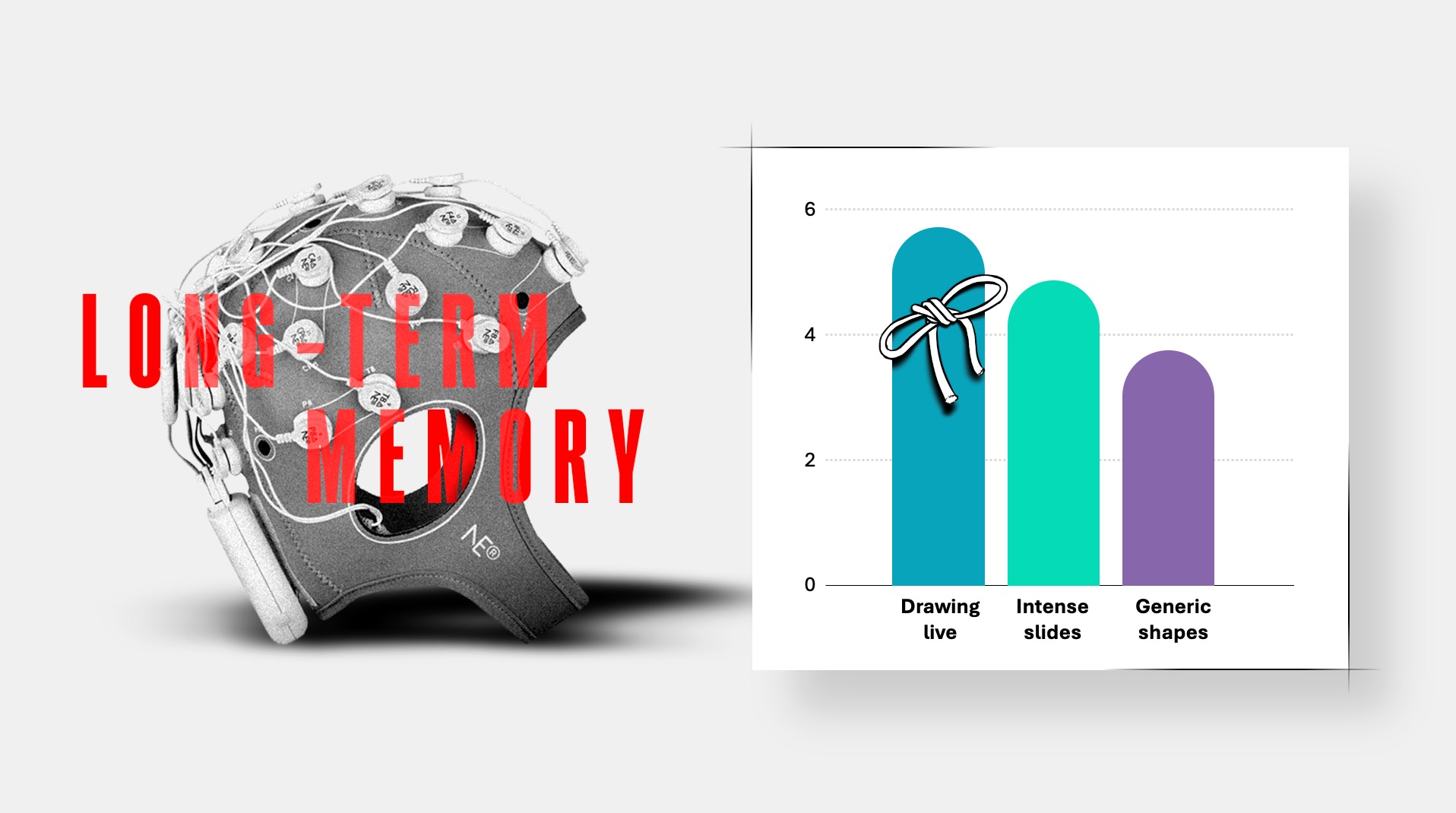
Since participants were learning with AI, and since these days there are a lot of coaching Ai tools, a practical guideline is to select a skill for yourself or for others if you’re in the consulting business, and repeat it again and again until there is improvement. While there may be slight differences in the moment, memory is better for both types in the long term. So, there is merit in monotony.