What happens after they look?
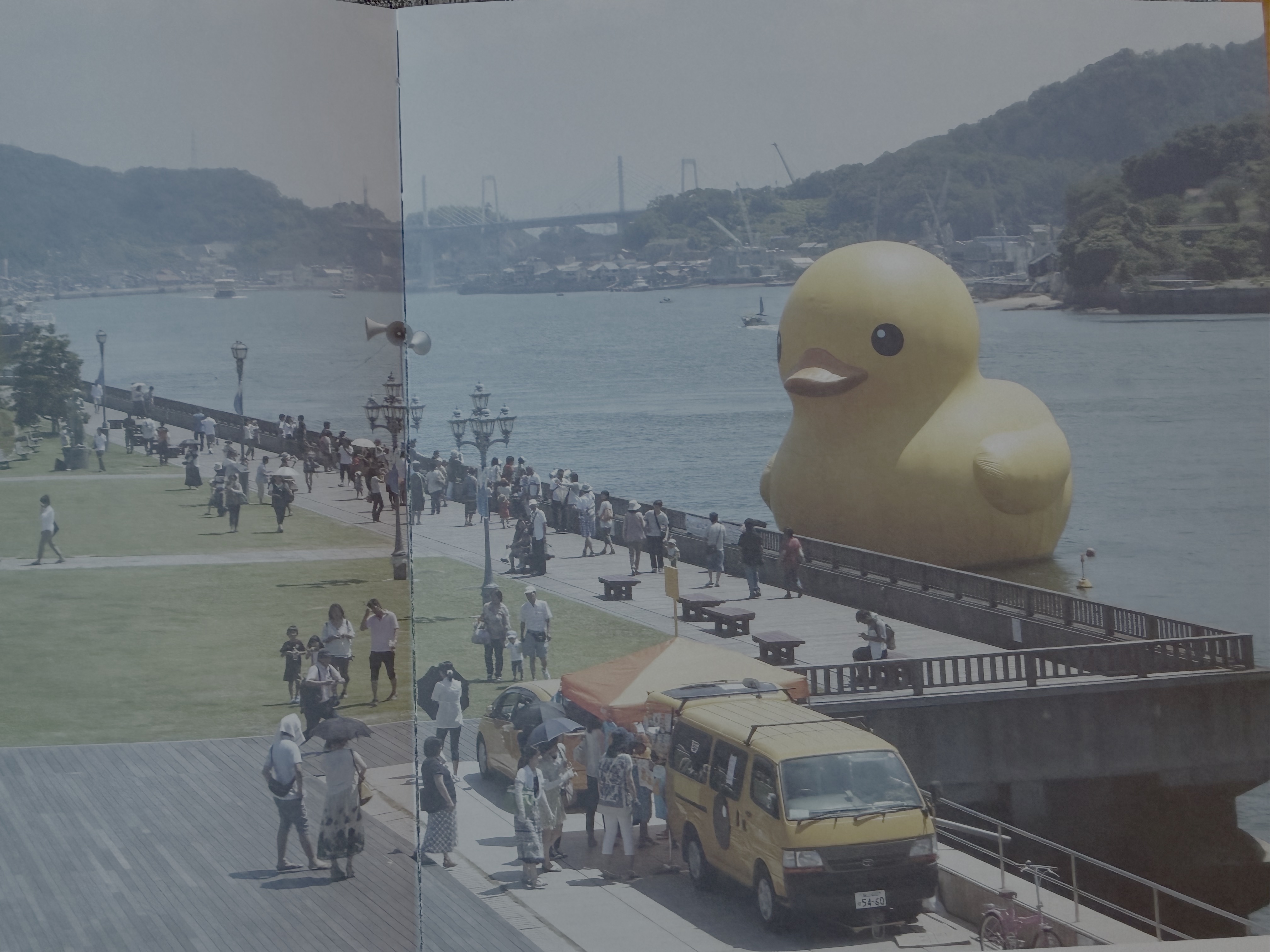
I was browsing through an art book, and I came across this image showcasing a giant duck. I found out that the duck is part of a series of extra-large floating sculptures created by Dutch artist Florentijn Hofman. This particular one was photographed in Onomichi, Japan, during a maritime festival. You can imagine the visitors’ surprise when they saw an object you typically associate with something much larger, but much, much, much, much smaller. The project apparently began in 2007, and the duck appeared in waterways around the world, like Amsterdam, Sydney, Sao Paolo, and Hong Kong. Two practical guidelines occurred to me as I looked into this artist’s work.
Because I strongly believe in the notion of a “10% message” (meaning controlling what others remember from one’s body of work), it’s useful to consider a message that “travels,” keeping its essence regardless of who receives it or where it is received. The giant duck ignited similar reactions in all these corners of the world. Sometimes, I get the question, “Should I adjust my 10% message depending on who I am talking with?” and while some customization may be necessary, at its foundation, a memorable 10% message appears to most people in your audience in most circumstances. I am using the word “most” because even in the case of the innocent duck, there were instances where it got abused or its presence was treated with negativity, but, for the most part, it achieved what it was intended to achieve: get you to stop, look, take photos, speak about it, and it brought people and businesses together. So, when you reflect on your 10% message for something that’s important to you, ask the question: would this message “travel” across different audiences and settings?
Also, the artist created the duck to suggest connection across borders because, in his view, you can see the world as one shared bathtub. The familiar and friendly duck was intended to bring back childhood memories and invite people to play. So, as you aim to create a memorable 10% message, it is useful to ask: “After people notice this, what should they understand?” Meaning and memory are often friends.