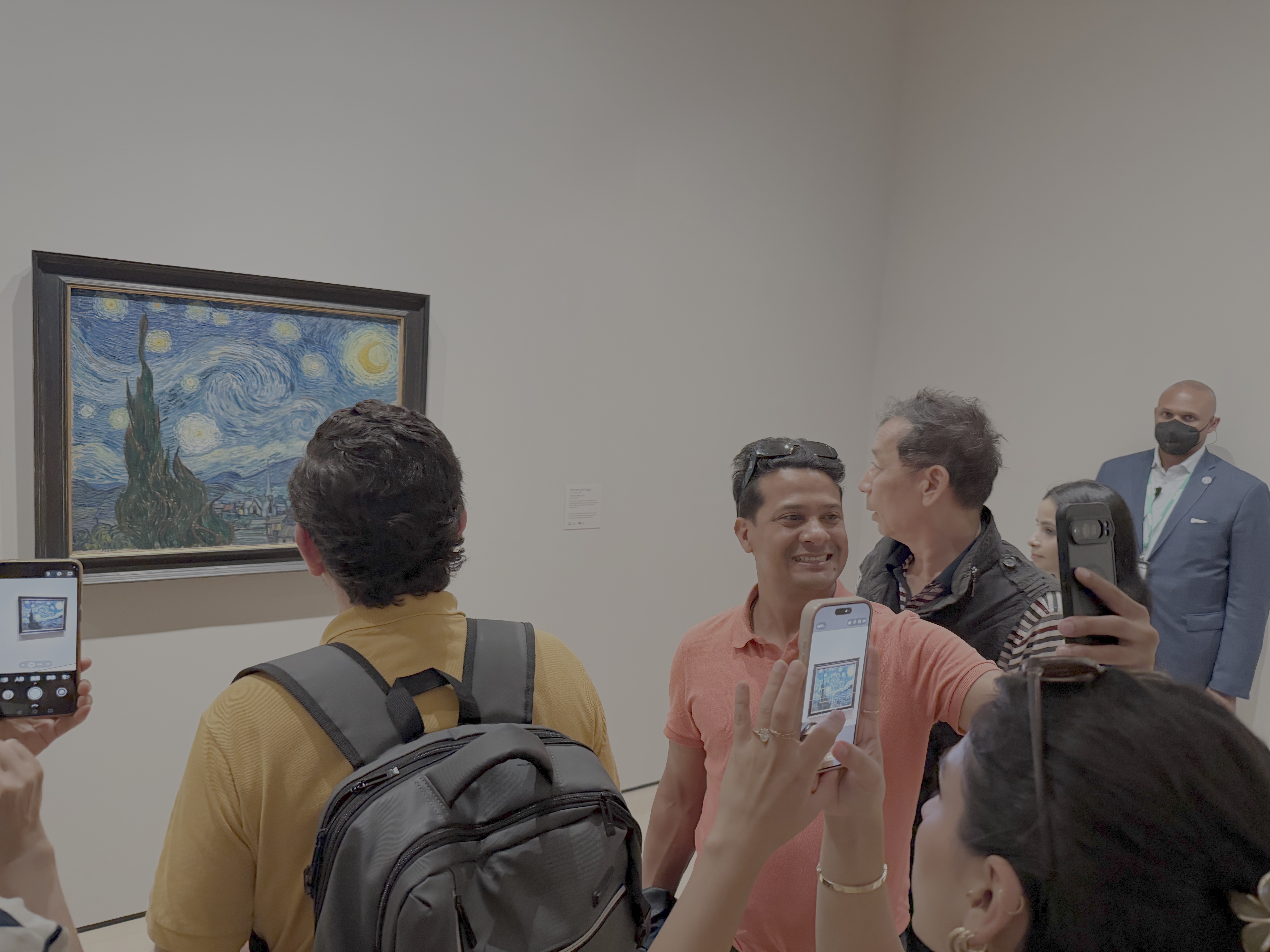
The average amount of time people spend paying attention to a work of art in a museum is about 28 seconds, and this time includes reading the label, taking pictures of the artwork, and also taking what’s called “arts-ies,” meaning selfies with the work of art. The stat is supported by MoMA in New York and the Art Institute in Chicago. I just observed all these actions in almost one shot while at MoMA, and as I was looking at the picture, I realized that it's tough to judge: look at how genuinely happy the person is taking the selfie. The overall picture is very humbling to me because even Van Gogh has to compete with the label, the phone, the crowd, the companion, the proof-of-being-there, and the little private joy of saying, “I was close to this.”
Imagine that you are creating a piece of communication that you consider a masterpiece. It is important to design for the reality of today’s attention and to consider that just because we labor over something, people will only be in a state of partial attention. But, even if people don’t stare at things for too long, it is practical to ask: what should a piece of comm have so others can look briefly, want to return, tell others about it, and even want to take a selfie with it? Imagine the difference in people’s reaction regarding your work: “I saw it,” versus “I want to be seen with it.” What kind of reaction does your communication invite? So, it’s important to ask when you evaluate your own content: would your audiences want to be associated with what you have to offer?
In addition, long attention does not always mean deep attention. Someone can stare at a slide for 30 seconds and remember nothing, and someone else can take a look for 10 seconds and have an emotionally meaningful experience. I believe that people still want proximity to meaning, but they just express it differently.