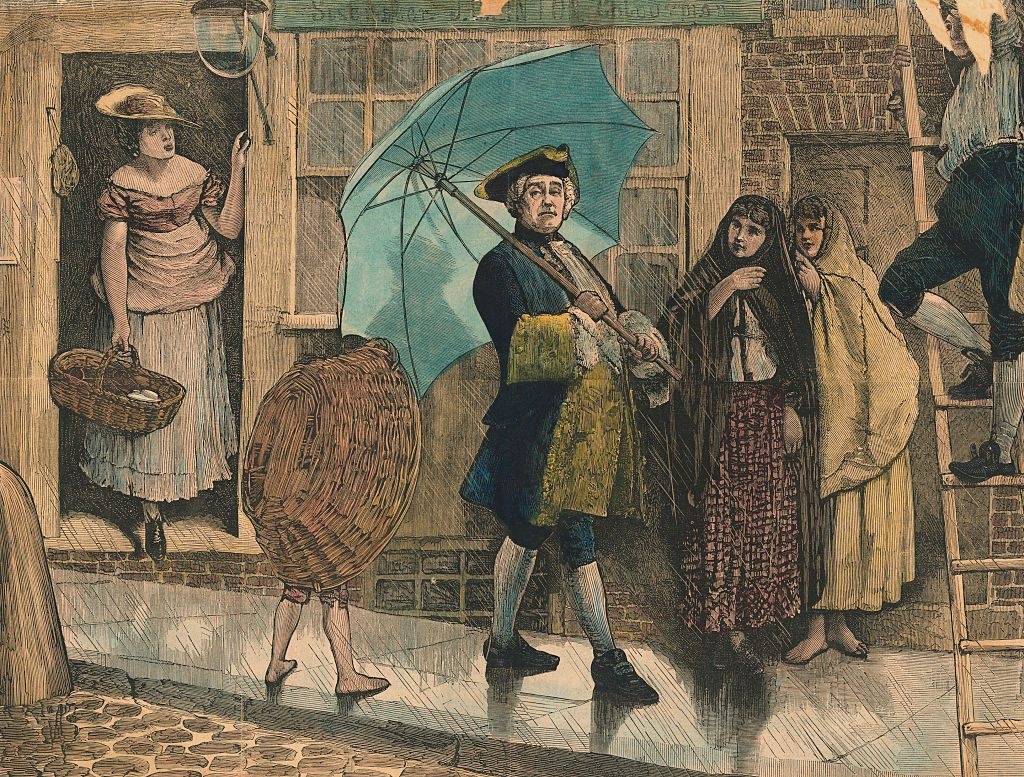
Why did umbrellas take centuries to become socially acceptable? For centuries in England, men who carried umbrellas were ridiculed. Umbrellas were associated with women, foreigners (“so French”), or people who lacked toughness. Coachmen even disliked umbrellas because they feared losing business if people could walk in the rain instead. But then came Jonas Hanway, an English philanthropist, who is credited with normalizing the use of umbrellas in the 1700s because he kept carrying one despite the mockery. By the 19th century, the practical benefits of staying dry won the public over, and umbrellas became an essential accessory for London businessmen and gentlemen. The social turnaround was so complete that a man's umbrella was colloquially referred to as a "Hanway".
In my neuroscience work, I see a related situation when it comes to introducing new concepts and trying to convince an audience to just adopt them. Initially, the brain may reject a new concept, but when people encounter it often enough and in enough contexts, the brain eventually treats it as familiar territory. So, in your own work, consider this small experiment: Think about one idea you've stopped sharing because people "weren't ready for it." Instead, ask yourself whether this new idea needs another encounter, and then another, and then another. Some of the most memorable ideas begin by looking as odd as someone carrying an umbrella through eighteenth-century London.