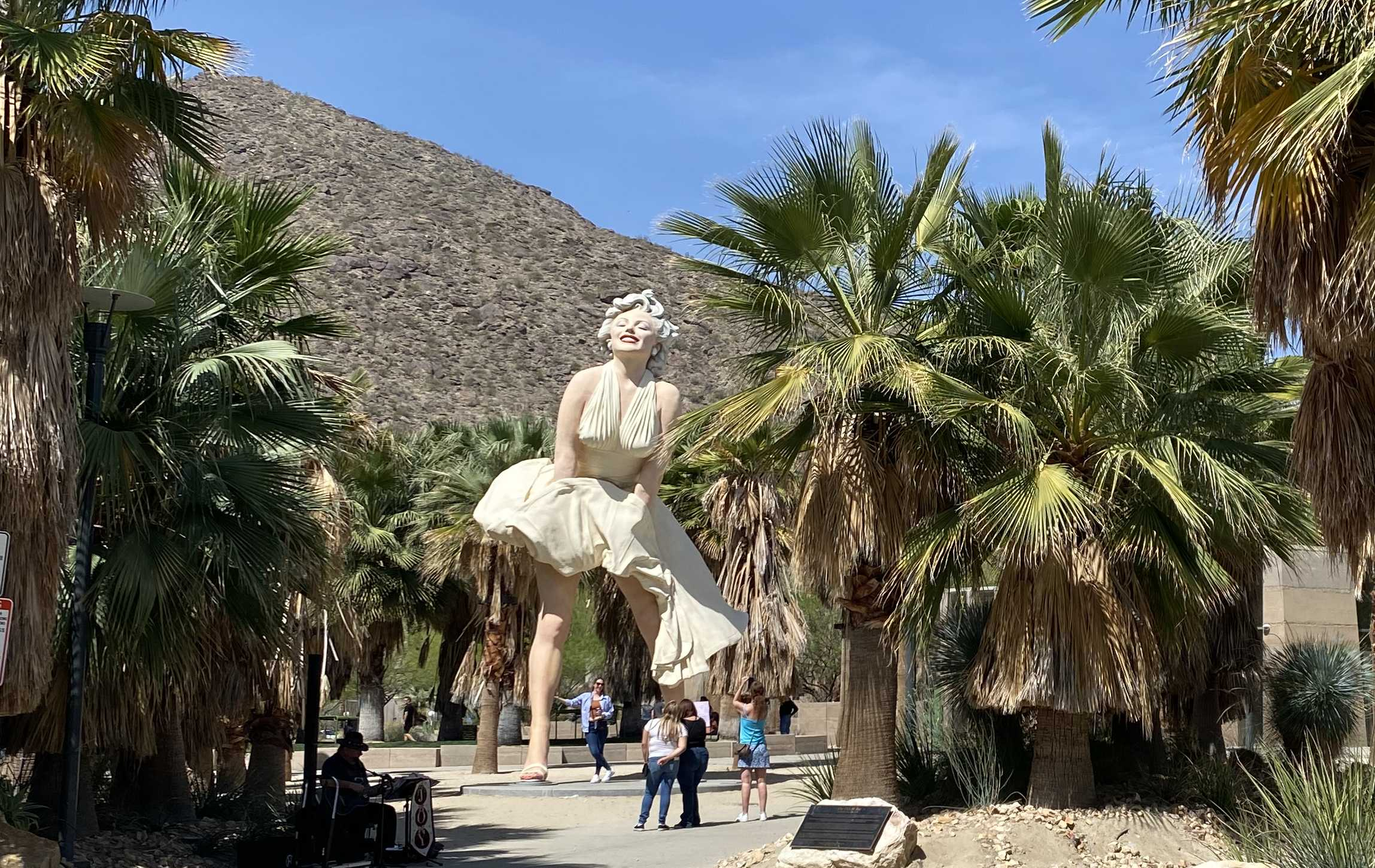
Had Marilyn Monroe lived, she would have turned 100 this year. I was reminded of this by a magazine published in Palm Springs, a city so enamored with her story that the downtown hosts her 26-foot statue to make sure everyone else is impressed and giggly as they take pictures under her skirt. But the city is also humble enough to admit how easily myth can become memory. For example, people still write to some hotels in Palm Springs to ask to reserve “that room that Marilyn Monroe slept in.” In particular, the Monkey Tree hotel holds the persistent rumor that President JFK and Marilyn Monroe had a tryst in Room 15. Even though the logistics would have made this impossible, the myth lives on, and the new owners are happy to lean into the humor because “it’s such an interesting story.” The importance of memorable myths is captured best in the Western movie “The Man Who Shot Liberty Valance.” The hero of the movie, at some point, confesses to a journalist that what propelled his career was not true, but the journalist refused to print the new story. “This is the West, sir,” the journalist reminded him, “and when legend becomes fact, print the legend.”
Every industry has a Room 15. Can you identify some myths in yours and establish your relationship with them: are you aware of them and just happy to giggle, or are you tempted to debunk them? The thing about myths is that we can look at them as good or bad, but this reductionist attitude does not serve us well. It’s better to ask the question: what does this myth do to us? After all, the concept of myth (think of mythology) is related to something symbolic, poetic, or "higher truth." A myth might be factually false but psychologically endearing. The JFK–Marilyn story will never tell us what really happened in Room 15. But it tells us what people want Palm Springs to have been: glamorous, secretive, sexually charged, and just beyond the reach of ordinary life. So, as you reflect on your own industry, you can ask what myth is really true, but also ask what makes people want them to be true. A myth may not tell you what happened, but it may tell you what people are still waiting to happen.