When your best idea sits in the shadows
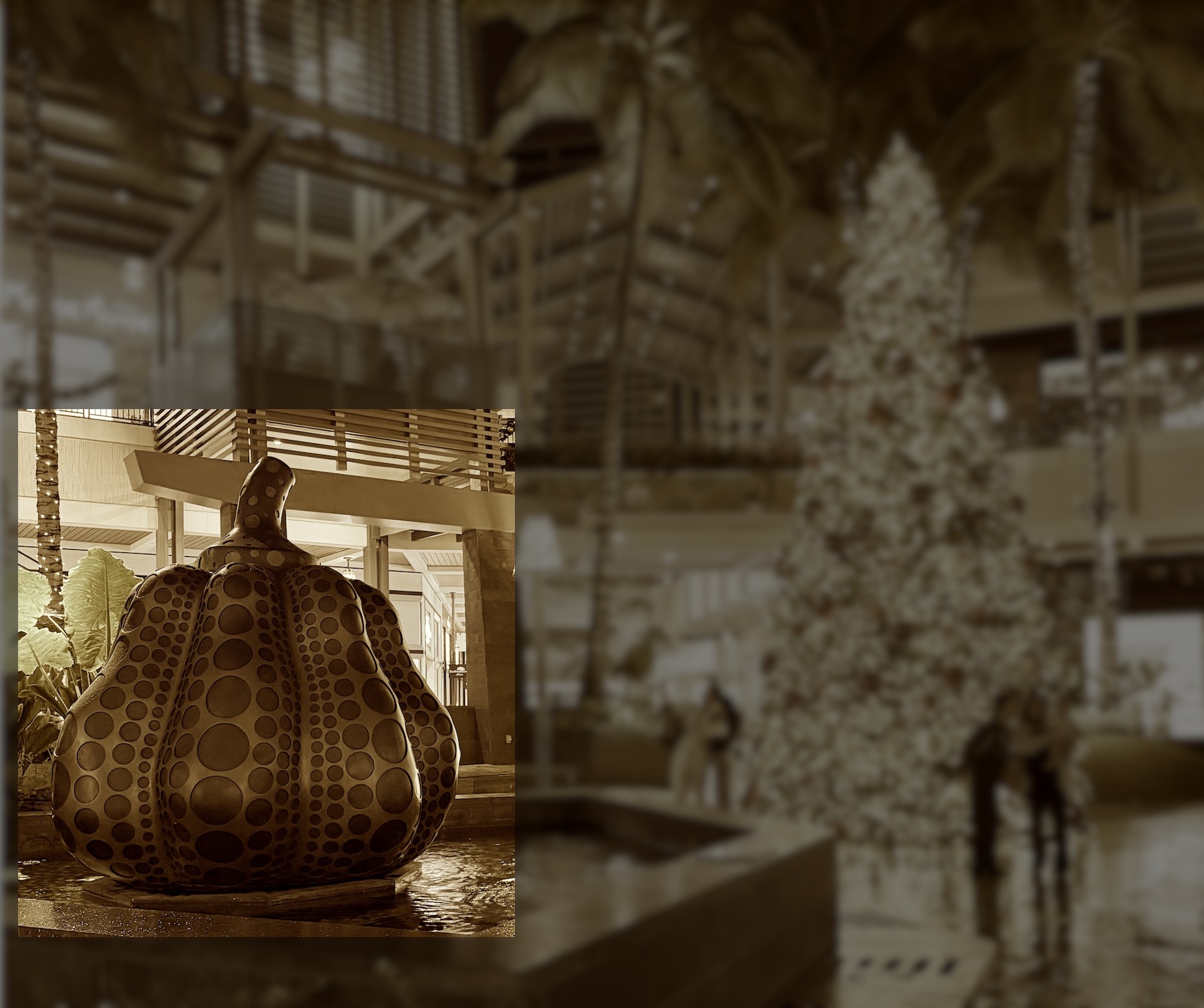
I was visiting a mall a few days ago and noticed how much people enjoyed this Xmas tree, and rightfully so because it is big and bright and seasonal and socially legible, meaning that people know to expect it and know what to do around it (pose or take selfies, as you can see here). So, it’s no surprise where the attention goes. Much more obscure is the artifact to the left of the tree. If you’re a fan of the Japanese artist Yayoi Kusama, you would recognize her pumpkin sculpture (see second picture). The shopping center purchased this around 2016, and even though its price is not revealed, similar sculptures would have cost about $3.5 to $5.5 million around the same time. For scale, an estimate for a fully decorated 40- to 60-foot holiday Xmas tree ranges from $50,000 to $75,000. So the tree has a head start while the pumpkin sits in the shadows. We can learn from this.
First, it is useful not to assume that when you have a great idea or product, people will automatically pay attention. It is true that the mall had some advertising to share that outstanding artwork had been distributed throughout (some pieces being worth millions), but you would have to scan a QR code at the entrance of the mall and then hunt for those pieces. A more useful approach would be to place details right next to the art and attract attention in a seasonal way, the same way the tree is doing. So, in a sense, you’re borrowing attention from something people already know and care about.
And once you get people to at least look in that direction, give them a reason to stay a while. For example, Yaoy Kusama, the artist, focused on pumpkins because, when she grew up during World War II, pumpkins were a source of food and comfort for her and her family, so she made this humble subject monumental. The caption near the sculpture could then prompt people to ask: What ordinary thing brings you comfort? Or, since this is around the holidays, the description could ask: What food or small ritual makes the holidays feel like home? Or, even outside of the holiday season, the description could say: How do you get a 1,200-pound pumpkin into a shopping center? Or an invitation to really interact with the art: Find the largest dot. Now find the smallest. Which one did you notice first?
Overall, as you reflect on messages that are important to you, it’s important to be humble that other things (bigger, brighter, and more common) will attract attention, while what you put effort into sits in the shadows. But you can still build a path into attention: give your audiences a reason to pause and pay attention, and reward that pause with a useful detail.